



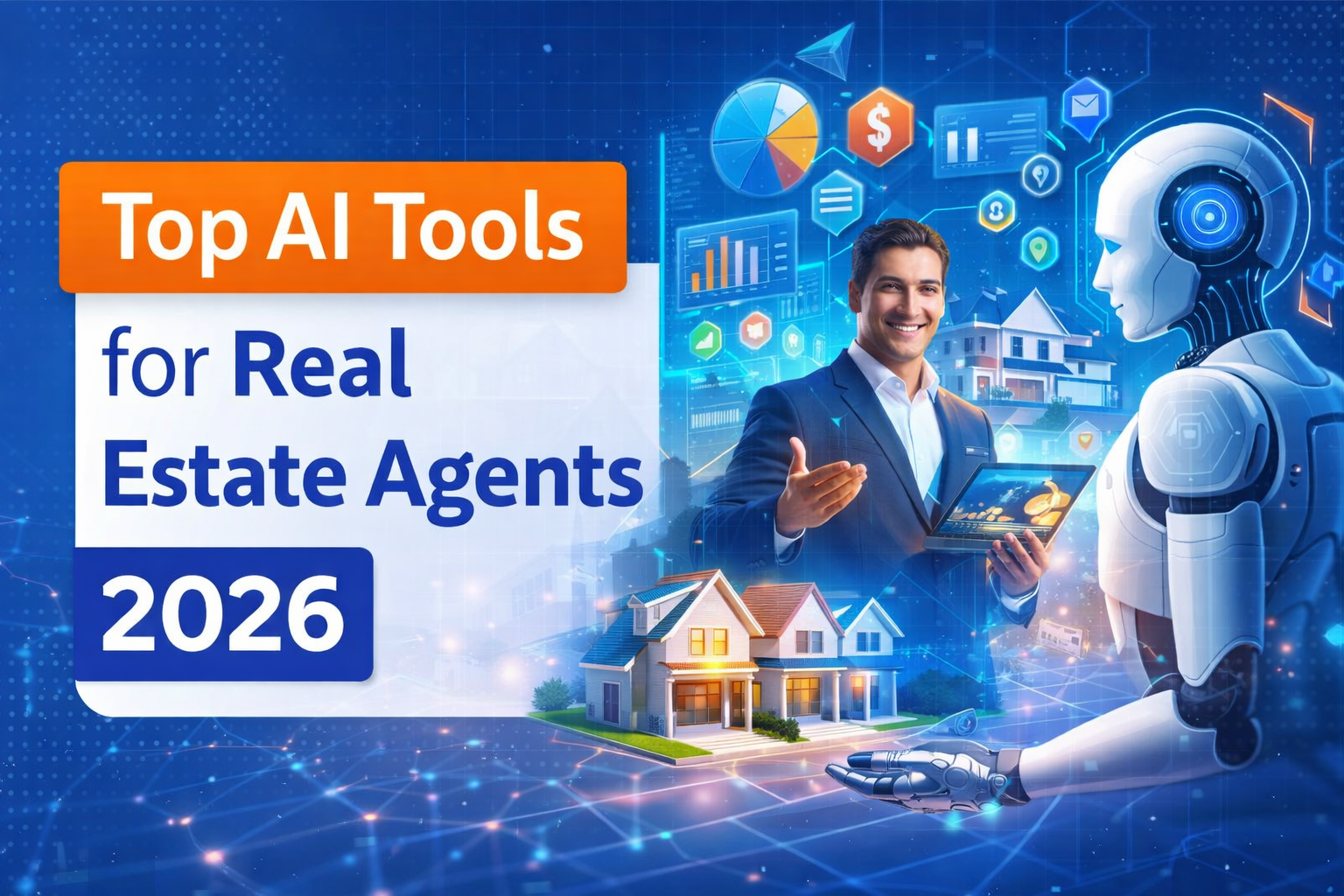
The real estate industry is undergoing a major transformation, and Artificial Intelligence (AI) is playing a key role in this change. In recent years, AI has moved from being a futuristic concept to a practical tool that helps real estate professionals work smarter, faster, and more efficiently. From property recommendations and market analysis to automated marketing and customer support, AI is revolutionizing how real estate agents operate in 2026.
Traditionally, real estate agents relied heavily on manual processes such as searching for potential buyers, managing leads, writing property descriptions, and analyzing market trends. These tasks often required significant time and effort. However, with the introduction of AI-powered tools, many of these processes are now automated, allowing agents to focus more on building relationships and closing deals.
AI technologies can analyze massive amounts of data in seconds, helping agents identify the right buyers, predict property prices, and understand market trends with greater accuracy. In addition, AI-powered chatbots, virtual assistants, and marketing tools help real estate professionals respond to inquiries instantly and create highly targeted advertising campaigns.
In 2026, AI is not just an advantage for real estate agents—it is becoming a necessity. Agents who leverage AI tools can generate more leads, improve customer experience, and stay ahead in an increasingly competitive market. In this blog, we will explore some of the top AI tools that real estate agents can use to boost productivity, enhance marketing strategies, and close more deals in the modern real estate landscape.
👉 Read more: Why Invest in Ivory County Sector 115 Noida
Why Real Estate Agents Need AI Tools
The real estate market has become highly competitive, and agents need smarter ways to attract buyers, manage leads, and close deals faster. This is where Artificial Intelligence (AI) plays a crucial role. AI tools help real estate agents automate repetitive tasks, analyze market data, and improve customer engagement, making their work more efficient and productive.
One of the biggest advantages of AI in real estate is lead generation and management. AI-powered platforms can analyze online behavior, property searches, and customer preferences to identify potential buyers and sellers. This allows agents to target the right audience and focus on high-quality leads instead of spending time on manual prospecting.
AI tools also improve marketing and advertising strategies. With the help of AI, agents can create optimized property descriptions, automate social media posts, and run highly targeted ad campaigns. AI-driven analytics can track campaign performance and suggest improvements, helping agents get better results from their marketing efforts.
Another major benefit is faster customer communication. AI chatbots and virtual assistants can instantly respond to inquiries on websites and social media platforms. This ensures that potential buyers receive quick responses, even outside business hours, which significantly improves customer experience and increases the chances of converting leads into clients.
Additionally, AI helps agents make data-driven decisions. By analyzing market trends, property values, and buyer behavior, AI tools provide valuable insights that help agents recommend the right properties to clients and determine the best pricing strategies.
In today’s digital era, using AI tools is no longer optional for real estate professionals. Agents who adopt AI can save time, increase efficiency, and stay ahead of competitors while providing a better experience for their clients.
15 Best AI Tools for Real Estate Agents in 2026
Artificial Intelligence has introduced a wide range of tools that help real estate agents automate tasks, improve marketing strategies, and generate high-quality leads. From creating property listings to analyzing market trends, AI tools are making the real estate business faster and more efficient. Below are 15 of the best AI tools real estate agents can use in 2026 to grow their business and close more deals.

1. ChatGPT
ChatGPT is one of the most powerful AI tools for real estate agents. It can help write property descriptions, generate blog posts, create email campaigns, and even respond to client inquiries instantly. Agents can use it to save time while producing professional marketing content.
Best For: Content writing, property descriptions, and client communication.

2. Jasper AI
Jasper AI is designed for marketing professionals. Real estate agents use it to create social media posts, listing descriptions, and email marketing campaigns quickly. It also maintains consistent brand voice across marketing channels.
Best For: Real estate marketing and advertising content.

3. Canva (AI Magic Studio)
Canva’s AI features allow agents to design property flyers, social media graphics, and marketing materials in minutes. Its drag-and-drop editor and AI-generated visuals make it easy even for non-designers to create professional designs.
Best For: Property marketing graphics and social media creatives.

4. Structurely
Structurely offers AI chatbots that automatically respond to website visitors, qualify leads, and schedule appointments. This ensures agents never miss potential buyers or sellers.
Best For: 24/7 lead qualification and automated conversations.

5. HouseCanary
HouseCanary uses predictive analytics and AI data models to forecast property values and market trends. This helps agents price properties accurately and guide investors with reliable data.
Best For: Property valuation and investment insights.

6. Virtual Staging AI
Virtual Staging AI transforms empty property photos into beautifully staged interiors. This helps listings look more attractive to buyers without spending money on physical staging.
Best For: Enhancing property images and listing presentations.

7. Lofty
Lofty is an AI-powered CRM designed specifically for real estate professionals. It combines lead generation, marketing automation, and transaction management in one platform.
Best For: Lead management and automated follow-ups.

8. Zillow Premier Agent
Zillow Premier Agent uses AI algorithms to connect agents with motivated buyers and sellers. It also offers advertising tools and CRM features to manage leads efficiently.
Best For: Buyer and seller lead generation.
9. Restb.ai
Restb.ai uses computer vision to automatically analyze and tag property images. This improves property search accuracy and helps listings appear more relevant to buyers.
Best For: Smart image tagging and property search optimization.

10. Homebot
Homebot provides personalized property value insights and financial reports to homeowners. It helps agents maintain relationships with past clients and generate repeat business.
Best For: Client retention and engagement.

11. Localize.city
Localize.city provides hyper-local data about neighborhoods, including schools, noise levels, crime statistics, and upcoming developments. This helps agents guide buyers more effectively.
Best For: Neighborhood research and buyer insights.

12. Pictory
Pictory converts text content into engaging videos. Real estate agents can transform property listings or blogs into promotional videos for social media marketing.
Best For: Real estate video marketing.

13. OpusClip
OpusClip turns long real estate videos into short clips optimized for platforms like Instagram Reels, YouTube Shorts, and TikTok.
Best For: Social media video content.
14. HeyGen
HeyGen allows agents to create AI-generated avatar videos for property updates, marketing messages, and client communication.
Best For: AI-generated marketing videos.
15. Gamma
Gamma helps real estate agents create professional presentations for listing proposals, buyer presentations, and marketing strategies in minutes.
Best For: Client presentations and property pitch decks.
Benefits of Using AI in Real Estate
Artificial Intelligence is transforming the way the real estate industry operates. From improving marketing strategies to enhancing customer experience, AI offers several advantages that help real estate agents work more efficiently and grow their business. As the industry becomes more competitive, using AI tools can give agents a significant edge in attracting clients and closing deals faster.
1. Faster Lead Generation
AI-powered platforms can analyze online behavior, property searches, and user interests to identify potential buyers and sellers. This helps real estate agents generate high-quality leads quickly and focus on clients who are more likely to convert.
2. Better Marketing Strategies
AI tools can create optimized property descriptions, social media posts, and ad campaigns automatically. They also analyze marketing data and suggest improvements, helping agents run more effective campaigns and reach the right audience.
3. Improved Customer Experience
AI chatbots and virtual assistants can instantly respond to customer inquiries on websites and social media platforms. This ensures that potential buyers receive quick answers to their questions, even outside business hours, improving overall customer satisfaction.
4. Accurate Property Valuation
AI can analyze large amounts of market data, recent property sales, and local trends to estimate property values more accurately. This helps agents price properties competitively and guide clients with reliable insights.
5. Time and Cost Efficiency
Many routine tasks such as data entry, follow-up emails, appointment scheduling, and document management can be automated with AI tools. This allows real estate agents to save time and focus more on building relationships and closing deals.
6. Smarter Decision Making
AI provides detailed market insights and predictive analytics that help agents understand trends, buyer preferences, and investment opportunities. With this data, agents can make more informed decisions and offer better advice to their clients.
7. Enhanced Property Marketing
AI technologies such as virtual staging, video creation, and automated design tools help agents present properties in a more attractive and professional way. This increases the chances of attracting potential buyers and selling properties faster.
Overall, AI is becoming an essential part of the modern real estate industry. Agents who adopt AI tools can improve efficiency, enhance marketing efforts, and deliver a better experience to their clients, ultimately helping them stay ahead in the competitive real estate market.
Future of AI in Real Estate
Artificial Intelligence is expected to play an even bigger role in the real estate industry in the coming years. As technology continues to evolve, AI will help real estate agents, developers, and investors make faster and more accurate decisions. From smarter property searches to advanced market predictions, AI is shaping the future of how properties are bought, sold, and managed.
One of the most significant developments will be AI-powered property search platforms. These platforms will analyze user behavior, preferences, and budgets to recommend properties that perfectly match the buyer’s needs. Instead of manually searching through hundreds of listings, buyers will receive highly personalized property suggestions within seconds.
Another important trend is predictive analytics. AI systems will be able to analyze large volumes of data such as property prices, infrastructure development, population growth, and economic trends to predict future property values. This will help investors identify profitable opportunities and make smarter investment decisions.
Virtual property tours and AI-powered visualization
Virtual property tours and AI-powered visualization will also become more common. Buyers will be able to explore properties through immersive virtual tours without physically visiting the location. AI will even allow users to customize interiors, furniture, and layouts digitally to see how a property could look after purchase.
In addition, AI-driven marketing and automation will continue to improve. Real estate agents will be able to run highly targeted advertising campaigns, automate follow-ups with potential clients, and analyze marketing performance more effectively. This will help agents generate more leads while reducing manual work.
Another exciting development is the integration of AI with smart home technology. Properties equipped with smart devices and AI systems will offer better security, energy efficiency, and convenience for homeowners. These features are likely to increase the value and demand for modern residential properties.
Overall, the future of AI in real estate looks extremely promising. As more companies and professionals adopt AI technologies, the industry will become more efficient, transparent, and data-driven. Real estate agents who embrace AI early will have a strong advantage in providing better services, attracting more clients, and staying competitive in the rapidly evolving property market.
Conclusion
Artificial Intelligence is rapidly transforming the real estate industry, making it easier for agents to manage their work, connect with clients, and close deals more efficiently. From automated marketing and lead generation to property valuation and customer support, AI tools are helping real estate professionals save time and improve productivity.
In 2026, using AI is no longer just an option—it has become an essential part of staying competitive in the real estate market. Agents who adopt AI-powered tools can streamline their daily tasks, analyze market trends more accurately, and deliver a better experience to buyers and sellers.
As technology continues to evolve, AI will bring even more innovations to the real estate sector, including smarter property searches, advanced predictive analytics, and highly personalized marketing strategies. By embracing these technologies, real estate agents can stay ahead of the competition and build stronger relationships with their clients.
Ultimately, AI is not replacing real estate professionals; instead, it is empowering them with smarter tools and insights. Agents who learn how to effectively use AI will be better positioned to grow their business and succeed in the rapidly changing real estate landscape.
Frequently Asked Questions (FAQ)
1. What are AI tools in real estate?
AI tools in real estate are software applications that use artificial intelligence to automate tasks, analyze property data, generate leads, and improve marketing strategies. These tools help real estate agents work more efficiently and make data-driven decisions.
2. How can AI help real estate agents?
AI can help real estate agents by automating repetitive tasks such as lead management, email follow-ups, and property marketing. It also provides insights into market trends, buyer behavior, and property pricing, helping agents close deals faster.
3. Which AI tools are best for real estate marketing?
Some of the best AI tools for real estate marketing include ChatGPT for content creation, Canva AI for designing marketing materials, Jasper AI for copywriting, and video tools like Pictory for creating promotional videos.
4. Can AI generate real estate leads?
Yes, AI-powered platforms can analyze online user behavior and property searches to identify potential buyers and sellers. This helps real estate agents target high-quality leads and improve their conversion rates.
5. Is AI replacing real estate agents?
No, AI is not replacing real estate agents. Instead, it is helping them work more efficiently by automating routine tasks and providing valuable market insights. Human expertise and relationship-building are still essential in real estate.
6. How does AI help in property valuation?
AI analyzes large amounts of market data, past sales records, and location trends to estimate property values more accurately. This helps agents set competitive prices and guide buyers and sellers with reliable information.
7. Are AI tools expensive for real estate agents?
Many AI tools offer affordable plans, and some even provide free versions with basic features. Real estate agents can choose tools based on their budget and business needs.
8. What is the future of AI in real estate?
The future of AI in real estate includes smarter property search platforms, predictive analytics for investment decisions, virtual property tours, and advanced marketing automation that helps agents reach the right audience more effectively.
Leave a Reply