




Buying a flat in India is one of the biggest financial decisions in a person’s life, and even a small mistake can lead to long-term stress or financial loss. Many homebuyers, especially first-time buyers, get influenced by attractive offers, glossy brochures, or emotional decisions without doing proper research. This often results in issues related to legal disputes, poor construction quality, or unexpected costs after purchase.
One of the most common problems buyers face is lack of due diligence. Ignoring the builder’s reputation, RERA registration, legal approvals, and clarity on carpet area can create serious complications later. In addition, many buyers fail to understand the builder–buyer agreement properly or overlook hidden charges such as maintenance fees, parking costs, and taxes, which increases the overall budget significantly.
This blog highlights the top 10 mistakes to avoid while buying a flat in India, helping buyers make informed and confident decisions. By being aware of these common errors and taking the right precautions, you can protect your investment, ensure peace of mind, and choose a home that truly meets your needs and long-term goals.
Also Read: https://www.growmorerealtors.com/blog/first-time-home-buyer-guide-in-india-2025/
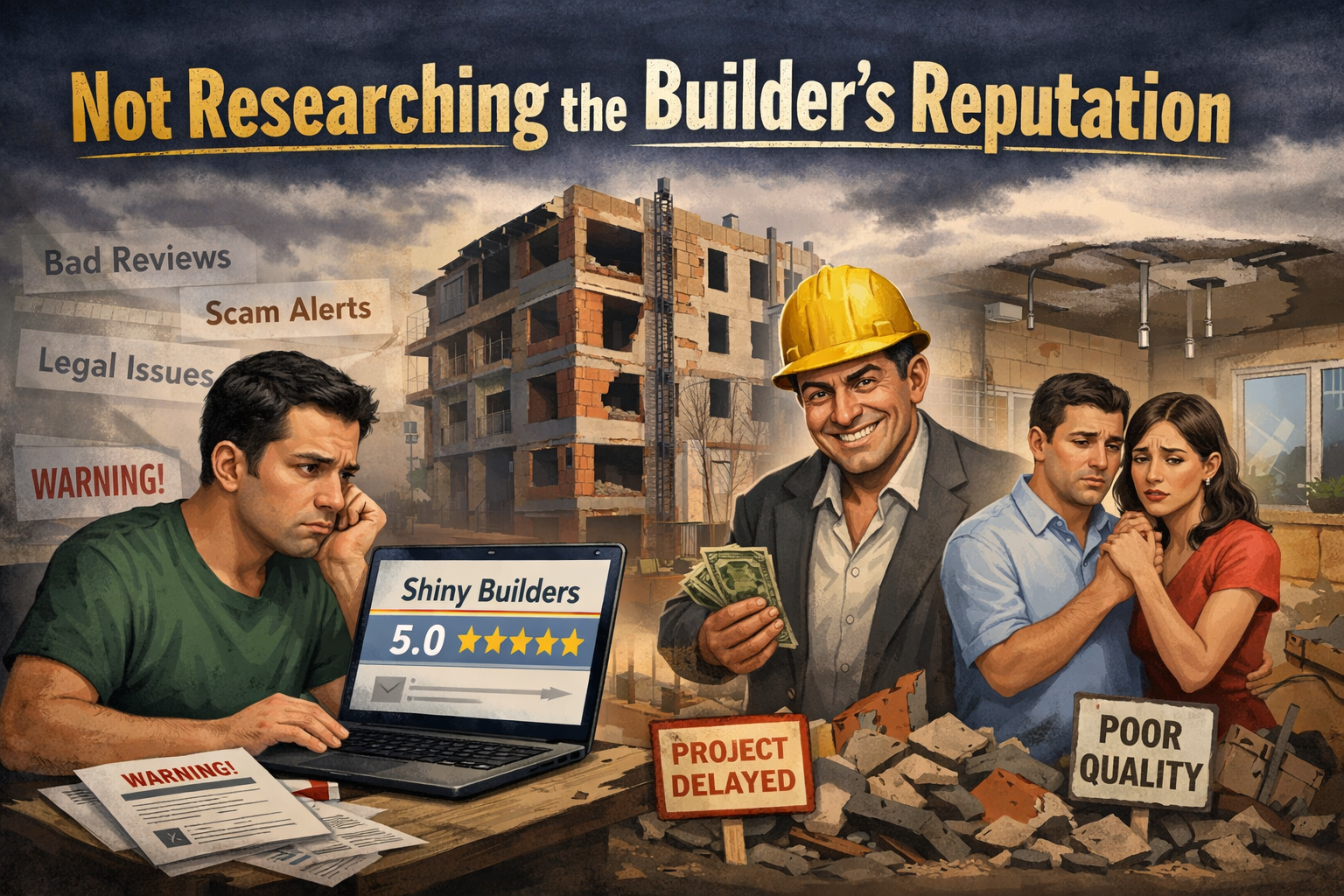
1. Not Researching the Builder’s Reputation
Buying a flat without checking the builder’s background is one of the biggest mistakes a homebuyer can make. Attractive prices and heavy discounts often hide serious issues like delayed possession, poor construction quality, or incomplete amenities.
Why Builder Reputation Matters
A builder’s past performance clearly shows what you can expect from your investment. A reputed developer is more likely to deliver the project on time and as promised.
What to Check Before Booking a Flat
- Past and ongoing projects completed by the builder
- On-time delivery record of previous projects
- Construction quality and finishing standards
- Maintenance condition of completed societies
- Customer reviews and feedback online
Verify Legal and Financial Credibility
- Check RERA registration of both builder and project
- Look for any ongoing legal disputes or complaints
- Ensure the builder has financial stability to complete the project
Risk of Ignoring Builder Research
- Delayed possession or stalled projects
- Poor construction quality and structural issues
- Changes in layout or reduction in promised amenities
- Difficulty in resale or low property value
Choosing a trusted and well-established builder helps reduce risk and ensures peace of mind. Proper research before investing protects your money and increases the chances of owning a quality home without future complications.
Also Read: https://www.growmorerealtors.com/blog/clove-county-sector-151-noida/
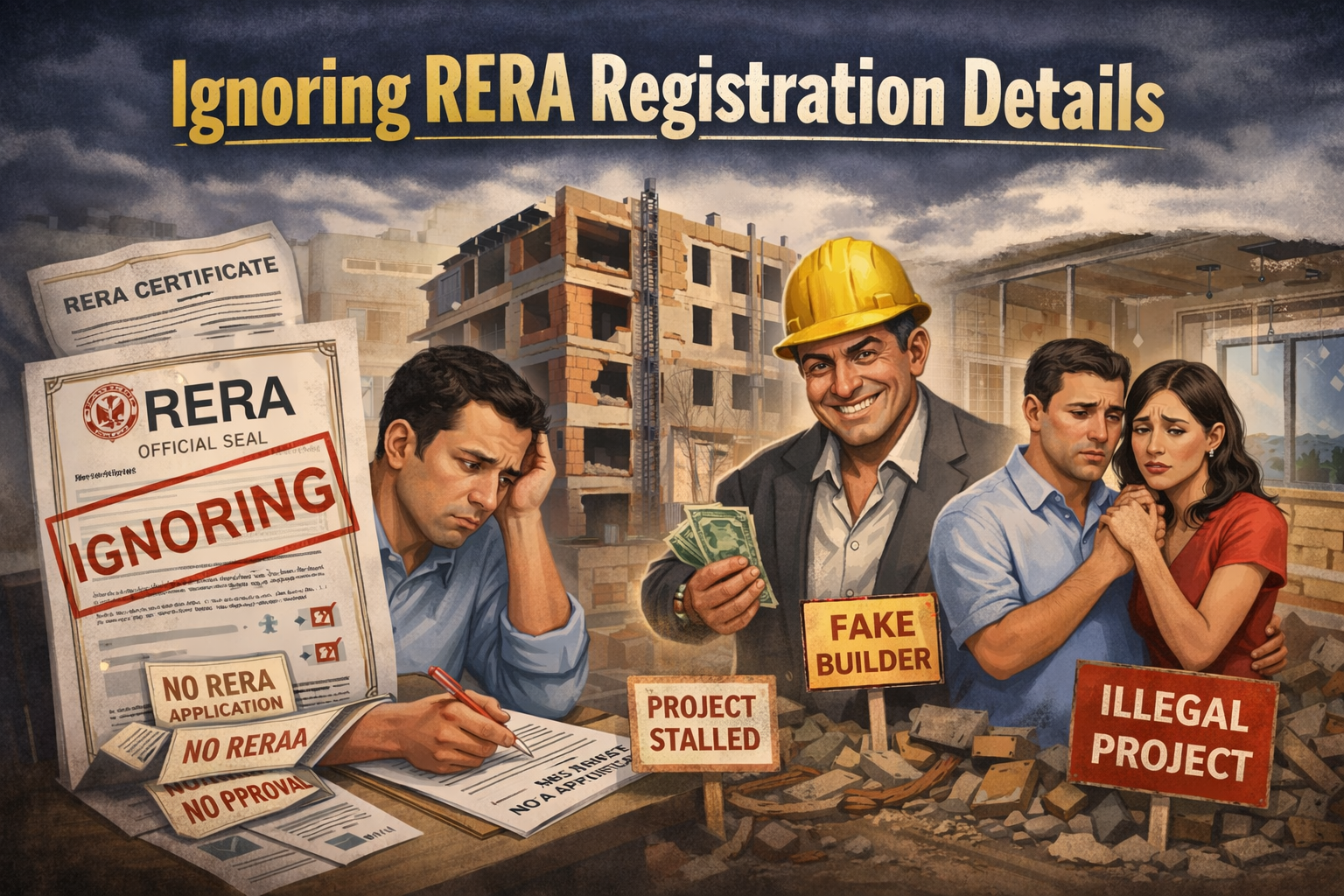
2. Ignoring RERA Registration Details
Ignoring RERA registration is a serious mistake that can expose homebuyers to legal and financial risks. The Real Estate (Regulation and Development) Act, or RERA, was introduced to bring transparency, accountability, and buyer protection into the real estate sector. Buying a flat in a non–RERA-registered project can lead to delays, misinformation, or even fraud.
What Is RERA and Why It Is Important
RERA ensures that builders follow government-approved plans and deliver projects within the promised timeline. It also protects buyers from false commitments and misleading advertisements.
Details You Must Check on RERA Website
- RERA registration number of the project
- Project completion date and construction status
- Approved layout plan and total units
- Carpet area details as per RERA norms
- Builder’s past registered projects and track record
Risks of Buying a Non-RERA Registered Project
- No legal protection in case of delays or disputes
- High chances of false promises and project changes
- Difficulty in filing complaints against the builder
- Increased risk of project cancellation or stalling
How RERA Protects Homebuyers
- Ensures timely delivery of projects
- Provides transparency in pricing and carpet area
- Offers a legal platform for dispute resolution
- Holds builders accountable for commitments
Always choose a RERA-registered project before buying a flat. It gives you legal security, transparency, and confidence that your investment is protected under government regulations.
Also Read: https://www.growmorerealtors.com/blog/county-the-center-court-gurgaon/

3. Not Verifying Property Legal Documents
Failing to verify legal documents is a major mistake that can lead to ownership disputes, financial loss, and long legal battles. Many buyers assume that if a project looks genuine, all approvals must be in place. However, without proper document verification, even a well-marketed property can turn into a risky investment.
Key Property Documents You Must Verify
Before booking or purchasing a flat, make sure all legal documents are clear and approved:
- Title deed confirming the builder’s ownership of land
- Approved building plan from local authorities
- Occupancy Certificate (OC) or Completion Certificate (CC)
- Land use certificate and conversion approvals (if applicable)
- Sale agreement and allotment letter
Why Legal Verification Is Important
Legal documents ensure that the property is free from disputes and approved by authorities. They also confirm that the construction follows government norms and regulations.
Risks of Ignoring Legal Due Diligence
- Ownership disputes and legal complications
- Difficulty in getting a home loan from banks
- Problems during resale or property transfer
- Risk of demolition or penalties by authorities
How to Stay Safe
- Verify documents through the state RERA portal
- Take help from a property lawyer or legal expert
- Ensure bank-approved projects for added security
Proper legal verification protects your rights as a buyer and ensures that your investment is safe, compliant, and hassle-free in the long run.
Also Read: https://www.growmorerealtors.com/blog/ivory-county-sector-115-noida/

4. Choosing the Wrong Location
Choosing the right location is just as important as choosing the right flat. Many homebuyers make the mistake of focusing only on the price, size, or amenities of the apartment while completely ignoring the long-term importance of location. A wrong location decision can affect your daily lifestyle, future property value, rental income, and even resale potential.
Why Location Plays a Crucial Role
The location of a flat decides how convenient and comfortable your life will be. Even a luxury flat loses its value if it is located in an area with poor connectivity or limited infrastructure. A good location ensures better appreciation, easy resale, and higher demand in the future.
Common Location-Related Mistakes Buyers Make
- Choosing a location only because the price is low
- Buying in undeveloped areas without checking future plans
- Ignoring traffic, pollution, and noise levels
- Not checking distance from workplace or schools
- Assuming future development without proper verification
Connectivity and Infrastructure Check
Before finalizing a flat, always evaluate the connectivity of the location:
- Distance from your workplace or business hubs
- Availability of metro, highways, or public transport
- Road connectivity during peak traffic hours
- Access to airports, railway stations, and expressways
Poor connectivity can lead to daily travel stress, higher commuting costs, and wasted time.
Social Infrastructure Matters
A good residential location should have easy access to daily needs and essential services:
- Schools and colleges
- Hospitals and medical facilities
- Shopping malls, markets, and grocery stores
- Banks, ATMs, and restaurants
- Parks and recreational spaces
Living in an area with weak social infrastructure can make daily life inconvenient, especially for families with children or elderly members.
Future Growth vs Reality
Many builders sell properties by promising “future development,” but not all promises turn into reality. Buyers should always:
- Check government-approved development plans
- Verify upcoming infrastructure projects like metro lines or highways
- Avoid relying only on verbal assurances from sales teams
Investing in a location with confirmed growth plans is safer than betting on uncertain future developments.
Impact on Property Value and Resale
Location directly affects:
- Property appreciation over time
- Rental demand and rental income
- Ease of resale
Flats in prime or well-connected areas attract higher demand and better returns, while poorly located properties may struggle to find buyers or tenants.
Safety and Environment Factors
Buyers should also consider:
- Crime rate and overall safety of the area
- Water availability and drainage system
- Pollution levels and nearby industrial zones
- Flood-prone or low-lying areas
Ignoring these factors can lead to serious problems after moving in.
How to Choose the Right Location
- Visit the location at different times of the day
- Talk to local residents about real issues
- Compare multiple areas before finalizing
- Balance price with convenience and future value
Choosing the right location ensures a better lifestyle today and a stronger investment tomorrow. A well-located flat not only gives peace of mind but also protects your long-term financial interests.
5. Overlooking Total Cost and Hidden Charges
One of the most common mistakes homebuyers make is focusing only on the base price of the flat while ignoring the total cost involved. Many buyers assume that the quoted price is the final amount, but in reality, several additional charges significantly increase the overall cost. Not planning for these hidden expenses can disturb your budget and cause financial stress later.
Understanding the Difference Between Base Price and Total Cost
The base price is just the starting point. The final amount payable includes multiple components that are often disclosed gradually during the booking and agreement stages.
Common Hidden Charges Buyers Often Miss
- GST on under-construction properties
- Floor rise charges
- PLC (Preferential Location Charges) for park-facing, corner, or road-facing flats
- Parking charges (covered or open)
- Clubhouse and amenities charges
- Maintenance charges (advance or one-time)
- Power backup and electricity connection charges
- Water connection and meter charges
- Registration and stamp duty costs
These charges can increase the total cost by a significant margin if not calculated in advance.
Impact on Your Budget and Home Loan
Many banks approve home loans based on the agreement value, not including all additional charges. As a result:
- Buyers may need to arrange extra funds from their own savings
- Monthly EMI planning can get disturbed
- Financial pressure increases during possession
Why Buyers Ignore These Costs
- Sales teams highlight only the attractive base price
- Lack of clarity in cost sheets
- Buyers rush decisions due to limited-time offers
- Poor understanding of real estate pricing structure
How to Avoid This Mistake
- Ask for a detailed cost sheet with all charges mentioned
- Confirm which charges are refundable and non-refundable
- Check if maintenance charges are one-time or recurring
- Compare total cost across multiple projects, not just base price
- Keep a buffer amount for unexpected expenses
Long-Term Financial Impact
Overlooking hidden charges can:
- Delay possession due to payment issues
- Force buyers to take personal loans at high interest
- Reduce overall return on investment
Understanding the complete cost structure helps you make a realistic and informed decision. Always evaluate the total cost instead of just the advertised price to avoid financial surprises and ensure a smooth home-buying experience.
Also Read: https://www.growmorerealtors.com/blog/au-leisure-valley/
6. Not Checking Carpet Area vs Super Built-Up Area
Many homebuyers make the mistake of judging a flat only by its advertised size without understanding what that size actually represents. Builders often promote the super built-up area, which looks bigger on paper, while the actual usable space inside the flat is much smaller. Ignoring the difference between carpet area and super built-up area can lead to disappointment after possession.
What Is Carpet Area?
Carpet area is the actual usable area inside the flat where you can place furniture or walk freely. It includes:
- Bedrooms, living room, kitchen
- Bathrooms and internal passages
It does not include:
- Balconies
- External walls
- Common areas like lifts, stairs, or corridors
As per RERA rules, builders must clearly mention the carpet area to ensure transparency.
What Is Super Built-Up Area?
Super built-up area includes:
- Carpet area
- Balcony area
- Thickness of walls
- Proportionate share of common areas like lobby, lift, staircase, and clubhouse
This area is always higher than the carpet area and is mainly used by builders to quote prices.
Why This Difference Matters to Buyers
Most buyers pay the price based on the super built-up area, but live only in the carpet area. This means:
- You may pay more but get less usable space
- Two flats with the same super built-up area can have different carpet areas
- Poor carpet efficiency reduces value for money
Carpet Area Efficiency: What to Look For
Carpet area efficiency is the ratio between carpet area and super built-up area.
- A good project usually offers 70%–75% carpet efficiency
- Anything significantly lower means you are paying more for common spaces
Common Buyer Mistakes
- Not asking for exact carpet area details
- Comparing flats only on super built-up area
- Not checking RERA-approved carpet area
- Assuming balconies and common areas are usable living space
How to Avoid This Mistake
- Always ask for the carpet area in writing
- Compare price per square foot based on carpet area
- Check carpet area details on the RERA website
- Physically inspect the flat layout and room sizes
Understanding the difference between carpet area and super built-up area helps you evaluate the true value of a flat. Always focus on carpet area to ensure you are paying the right price for the actual living space you will use every day.
7. Ignoring Construction Quality and Specifications
Many homebuyers focus on the location, price, and amenities of a project but overlook construction quality and technical specifications. This mistake can lead to frequent repairs, safety issues, and high maintenance costs after possession. A flat may look attractive during the site visit, but poor construction quality becomes visible only after a few months of living.
Why Construction Quality Is Important
Construction quality directly impacts the durability, safety, and comfort of your home. Good-quality construction ensures:
- Long life of the building
- Better safety during natural events like earthquakes
- Lower repair and maintenance costs
- Higher resale and rental value
Ignoring this aspect can turn your dream home into a long-term expense.
Key Construction Aspects You Must Check
Before finalizing a flat, pay close attention to the following:
- Quality of cement, steel, and brickwork
- Flooring material (tiles, marble, or wooden flooring)
- Door and window quality (wood, UPVC, aluminum)
- Plumbing fittings and bathroom fixtures
- Electrical wiring, switches, and safety standards
Importance of Project Specifications
Project specifications define what exactly the builder is promising. Many buyers do not read this section carefully and later realize that the delivered materials are of lower quality.
Always verify:
- Brand and type of fittings used
- Wall finish (paint, wallpaper, texture)
- Kitchen fittings and modular provisions
- Power backup and fire safety systems
Common Construction-Related Issues Faced by Buyers
- Cracks in walls and ceilings
- Water seepage and leakage
- Poor sound insulation
- Uneven flooring and finishing defects
- Low-quality fittings that wear out quickly
How to Assess Construction Quality
- Visit the project site multiple times
- Check sample flats and actual construction floors
- Talk to residents of the builder’s completed projects
- Ask for written specifications and approved drawings
- Get a professional inspection if needed
Long-Term Impact of Poor Quality
Ignoring construction quality can lead to:
- High repair expenses
- Reduced property value
- Safety concerns for your family
- Difficulty in resale
A flat is a long-term investment, and construction quality should never be compromised. Always verify specifications and workmanship to ensure your home is strong, safe, and built to last.
8. Not Understanding the Builder–Buyer Agreement
Many homebuyers sign the builder–buyer agreement without reading or fully understanding its terms and conditions. This agreement is a legally binding document that defines the rights and responsibilities of both the buyer and the builder. Ignoring its fine print can result in financial loss, delayed possession, and limited legal options in case of disputes.
What Is the Builder–Buyer Agreement?
The builder–buyer agreement is a contract that outlines all important details of the property purchase, including:
- Flat details, carpet area, and project specifications
- Total price and payment schedule
- Possession timeline and handover conditions
- Penalty clauses for delays
- Cancellation and refund policies
Clauses Buyers Often Ignore
Many buyers focus only on price and possession date, while missing critical clauses such as:
- Delay penalty charged to buyers vs compensation offered by the builder
- Force majeure clauses that allow possession delays
- Change in layout or specifications clauses
- Maintenance and defect liability period
- Exit or cancellation charges
Risks of Not Reading the Agreement Carefully
- One-sided clauses favoring the builder
- No proper compensation for delayed possession
- Unexpected charges at later stages
- Difficulty in filing legal complaints
Payment Schedule and Possession Timeline
Always check whether the payment plan is linked to construction milestones. Avoid agreements with unclear timelines or vague completion dates.
How to Protect Yourself
- Read the agreement carefully before signing
- Compare agreement terms with RERA-approved details
- Consult a property lawyer for legal clarity
- Do not rely on verbal promises by sales teams
- Ensure all commitments are mentioned in writing
Understanding the builder–buyer agreement gives you legal security and clarity. Taking time to review this document can save you from major disputes and financial stress in the future.
9. Buying Without Comparing Multiple Projects
One of the biggest mistakes homebuyers make is rushing to book a flat in the first project they like without comparing multiple options. Real estate is a long-term investment, and making a decision without proper market research can lead to overpaying, missing better options, or choosing a project with poor amenities or connectivity.
Why Comparison Is Important
Comparing multiple projects allows buyers to:
- Get the best value for money
- Evaluate location, price, amenities, and construction quality
- Understand the difference between carpet area, super built-up area, and hidden charges
- Check builder credibility and RERA registration
Key Factors to Compare
When evaluating projects, consider these points carefully:
- Price per square foot and total cost including hidden charges
- Carpet area efficiency and usable space
- Amenities and clubhouse facilities
- Construction quality and specifications
- Location, connectivity, and future growth potential
- Builder reputation and track record
Risks of Not Comparing Projects
- Paying more for less usable space or poor amenities
- Missing out on better-located or more reputable projects
- Increased likelihood of encountering legal or construction issues
- Lower appreciation and resale value
How to Effectively Compare Projects
- Shortlist at least 3–5 projects in your preferred area
- Visit each site physically to check construction quality and surroundings
- Take note of nearby social infrastructure like schools, hospitals, and markets
- Review payment plans, total cost, and maintenance charges
- Check online reviews and talk to existing residents, if possible
Long-Term Benefits of Comparison
Taking the time to compare multiple projects ensures that you make an informed choice. It increases the chances of finding a flat that offers the best balance between price, quality, location, and future returns, making your home purchase a smart and stress-free investment.
10. Not Planning Your Budget and Home Loan Properly
Buying a flat is one of the biggest financial decisions a person makes in their lifetime. It’s not just about selecting the right location, amenities, or builder; financial planning plays a crucial role in ensuring a smooth and stress-free home-buying experience. One of the most common mistakes homebuyers make in India is not planning their budget and home loan properly, which can lead to financial strain, delayed possession, and even long-term debt problems.
Many buyers focus solely on the property itself – the layout, number of bedrooms, or the luxury amenities – without realizing that owning a home involves multiple hidden costs. Poor financial planning not only affects your ability to pay EMIs but can also impact your lifestyle, savings, and future investments. Let’s dive deeper into why this mistake is so critical and how you can avoid it.
Understanding the Importance of Budget Planning
Budget planning is not just about ensuring you have enough money to buy the flat. It is about evaluating your overall financial capacity and factoring in all the costs associated with property purchase and maintenance. Here’s why it’s essential:
- Avoiding Overstretching Finances – Without a proper budget, buyers often commit to EMIs that are too high relative to their income, leaving them with limited funds for daily expenses or emergencies.
- Ensuring Full Payment of All Charges – The total cost of a property includes base price, registration charges, stamp duty, GST, maintenance deposits, parking charges, and club membership fees. Ignoring these can create unexpected financial pressure.
- Protecting Your Credit Score – Inability to pay EMIs on time due to poor planning can negatively impact your credit score, making future loans more expensive or difficult to obtain.
- Peace of Mind – A well-planned budget ensures that you can enjoy your new home without worrying about financial stress.
Common Budgeting Mistakes by Homebuyers
Many buyers make several common mistakes when planning their budget:
- Focusing Only on Base Price – The advertised price often excludes GST, parking charges, club membership, maintenance deposits, and other hidden costs.
- Ignoring Future Maintenance Costs – Ongoing monthly or yearly maintenance, utility bills, and society charges can add up significantly over time.
- Underestimating Registration and Stamp Duty – These legal charges are mandatory and often cost a substantial amount depending on the state.
- Not Keeping an Emergency Fund – Unexpected delays or additional payments during construction require financial backup.
Home Loan Planning Mistakes to Avoid
For most buyers in India, purchasing a flat without a home loan is rare. However, improper planning of the home loan can be a critical mistake. Here are the most common errors:
- Not Comparing Interest Rates Across Banks – Different banks offer different rates, processing fees, prepayment penalties, and loan tenures. Not comparing can cost you thousands over the tenure.
- Borrowing More Than You Can Afford – Overestimating repayment capacity may lead to missed EMIs or financial stress.
- Ignoring Loan Tenure Implications – While longer tenures reduce EMI, they increase the total interest paid over time. Shorter tenures reduce interest but increase EMI, which may strain finances.
- Overlooking Hidden Loan Charges – Prepayment penalties, foreclosure charges, and processing fees are often ignored but can impact the total loan cost.
- Not Factoring in Income Growth or Inflation – Financial planning should account for future salary increments, inflation, and rising living expenses.
How to Plan Your Budget and Home Loan Properly
A systematic approach to budgeting and loan planning can save you from financial stress. Follow these steps:
-
Calculate Your Maximum Affordable EMI
-
Analyze your monthly income, expenses, and existing liabilities
-
Use the 30%-40% rule: your home loan EMI should ideally not exceed 30-40% of your monthly income
-
-
Include All Additional Costs
-
Base price of the flat
-
Registration charges, stamp duty, and legal fees
-
GST (if applicable)
-
Maintenance deposit and society fees
-
Parking charges, club membership, and utility connections
-
-
Check Loan Eligibility and Terms
-
Compare interest rates from multiple banks
-
Decide on fixed vs floating interest rate
-
Evaluate the tenure and EMI amount carefully
-
-
Maintain a Contingency Fund
-
Keep at least 10-15% of total budget for unexpected expenses
-
Consider construction delays, extra charges, or urgent personal needs
-
-
Use Online Calculators
-
Use EMI calculators to determine monthly payments
-
Compare total interest payable for different loan tenures
-
-
Plan for Long-Term Financial Goals
-
Ensure EMIs do not hinder savings, investments, or retirement planning
-
Factor in other financial commitments like children’s education, car loans, or family support
-
The Long-Term Impact of Poor Financial Planning
Failing to plan your budget and home loan properly can have serious consequences:
- Financial Stress – Difficulty managing EMIs, household expenses, and emergencies can affect your lifestyle and mental peace.
- Delayed Possession – If payments are delayed or loans are not managed properly, possession of the flat can get delayed.
- Higher Interest Payments – Choosing a loan with higher interest or longer tenure without proper calculation increases total interest paid over time.
- Risk of Default – In extreme cases, poor planning can lead to missed EMIs and risk of legal action from banks.
- Reduced ROI – Poorly planned home loans can reduce your return on investment when reselling the property, as EMIs and interest eat into profits.
Tips to Avoid Financial Mistakes While Buying a Flat
- Always calculate total cost, not just the flat price
- Compare multiple home loans to get the best interest rates and terms
- Take a professional financial advisor’s help if needed
- Keep a buffer for unexpected charges or construction delays
- Read the builder–buyer agreement carefully to know payment milestones and penalties
- Ensure EMIs fit comfortably within your monthly budget
Conclusion
Not planning your budget and home loan properly is a mistake that can turn your dream home into a financial burden. Proper financial planning ensures you can comfortably pay for your flat, manage EMIs, and avoid unexpected charges. By calculating the total cost, comparing home loans, maintaining an emergency fund, and planning for long-term goals, you can make your home purchase a smooth, stress-free, and rewarding experience.
A home is not just an investment; it is a place where you build memories. Smart financial planning guarantees that you enjoy this investment without worry and secures your financial future while maximizing the value of your property.
Leave a Reply