
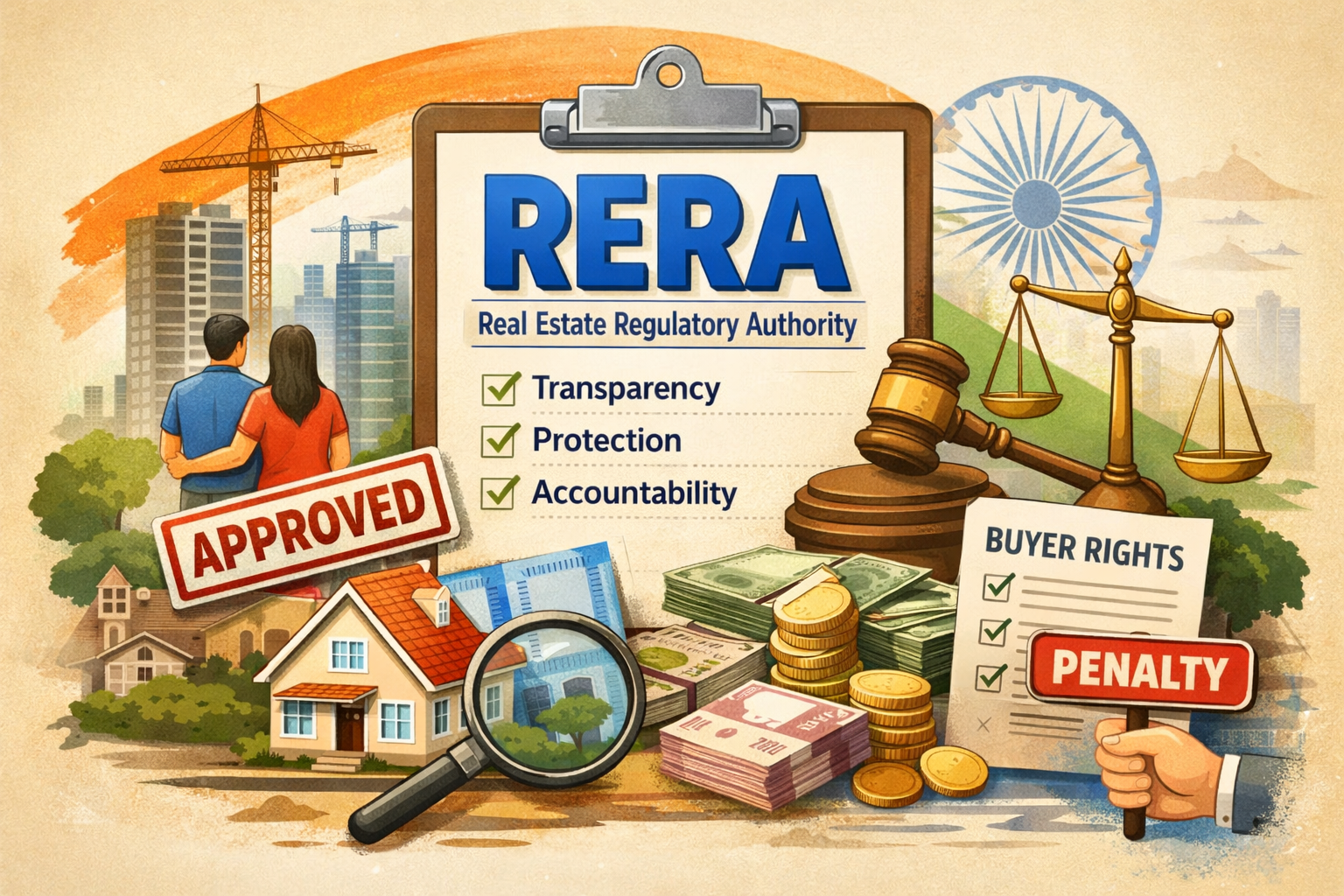
The Indian real estate sector has long been one of the most significant contributors to the economy, but for many years it lacked transparency and accountability. Property buyers often faced issues such as delayed project deliveries, misleading advertisements, unclear carpet area calculations, and misuse of funds by developers. To address these challenges and protect the interests of homebuyers, the Government of India introduced the Real Estate (Regulation and Development) Act, commonly known as RERA.
RERA was implemented with the objective of bringing transparency, efficiency, and discipline to the real estate market. It establishes a regulatory authority in each state to monitor real estate projects and ensure that developers follow fair practices. Under RERA, it is mandatory for builders to register their residential and commercial projects before advertising or selling them. This ensures that buyers have access to verified project details, approvals, timelines, and legal information.
One of the most important aspects of RERA is that it clearly defines the rights and responsibilities of both buyers and developers. Property buyers are now legally entitled to accurate information, timely possession, and compensation in case of delays or false commitments. At the same time, developers are held accountable for project completion and quality standards.
For property buyers, especially first-time homebuyers and investors, RERA acts as a safeguard against fraud and uncertainty. It increases buyer confidence, promotes ethical practices among developers, and creates a more organized real estate ecosystem. Whether you are purchasing an under-construction flat or investing in a new project, understanding RERA is essential to making a safe and informed property decision.
In this guide, we will explain what RERA is, how it works, and why it is extremely important for every property buyer in India.
Also Read: https://www.growmorerealtors.com/blog/clove-county-sector-151-noida/
What Is RERA? (Real Estate Regulatory Authority Explained)
RERA stands for Real Estate (Regulation and Development) Act. It is a landmark legislation introduced by the Government of India to regulate the real estate sector and protect the interests of property buyers. The act aims to bring transparency, accountability, and fairness to real estate transactions across the country.
Full Form and Meaning of RERA
The full form of RERA is Real Estate (Regulation and Development) Act, 2016. Under this act, a regulatory authority called the Real Estate Regulatory Authority is established in every state and union territory. This authority is responsible for overseeing real estate projects, developers, and agents to ensure compliance with the law.
In simple terms, RERA acts as a watchdog for the real estate sector, ensuring that builders follow ethical practices and buyers get what is promised to them.
When Was RERA Introduced in India?
The RERA Act was passed by the Indian Parliament in March 2016 and came into force on 1st May 2017. Since real estate is a state subject, each state has its own RERA authority and rules, but the core objective of the act remains the same across India.
Objectives of the RERA Act
The primary objectives of RERA include:
- Protecting the rights and interests of property buyers
- Ensuring timely delivery of real estate projects
- Bringing transparency in project approvals, pricing, and carpet area
- Preventing misleading advertisements and false promises
- Creating a fast and efficient dispute resolution mechanism
Who Comes Under RERA?
RERA applies to:
- Residential and commercial real estate projects above a specified size
- Builders and developers
- Real estate agents involved in selling or marketing properties
Most under-construction projects must be registered under RERA before being advertised or sold.
In short, RERA is a game-changing law that has transformed the Indian real estate sector by making it more buyer-centric, transparent, and trustworthy.
Also Read: https://www.growmorerealtors.com/blog/county-the-center-court-gurgaon/
Key Features of the RERA Act
The Real Estate (Regulation and Development) Act (RERA) introduced several important provisions to ensure transparency, accountability, and fairness in the real estate sector. These features are designed to protect property buyers and regulate the practices of builders and real estate agents.
Mandatory Registration of Projects and Agents
Under RERA, it is mandatory for all eligible residential and commercial real estate projects to be registered with the respective state RERA authority before being advertised or sold. Real estate agents must also register themselves under RERA to legally facilitate property transactions. This ensures that only verified and approved projects are marketed to buyers.
Transparency in Project Details
RERA requires developers to disclose complete project details on the official RERA website. This includes project layout plans, approvals, carpet area, construction timeline, land status, and developer background. Buyers can easily access and verify this information before making a purchase decision.
Carpet Area Standardization
One of the most buyer-friendly features of RERA is the standard definition of carpet area. Builders can now sell properties only on carpet area, excluding balconies, walls, and common areas. This brings clarity in pricing and prevents misleading calculations.
Timely Project Delivery Rules
RERA strictly enforces project completion timelines. Developers must declare the possession date at the time of registration and are legally bound to meet it. Any delay without valid reason makes the builder liable to compensate the buyer.
Penalties for Builders for Delays and Violations
RERA empowers authorities to impose heavy penalties, fines, or even imprisonment on developers who violate the act. This includes delays, false advertisements, or misuse of funds, ensuring greater accountability.
Separate Escrow Account for Project Funds
Builders are required to deposit 70% of the project funds collected from buyers into a separate escrow account. This money can be used only for construction and land-related expenses, reducing the risk of fund diversion.
Overall, these key features make RERA a powerful tool for buyer protection and a major step toward a transparent and disciplined real estate market in India.
Also Read: https://www.growmorerealtors.com/blog/first-time-home-buyer-guide-in-india-2025/
Rights of Property Buyers Under RERA
One of the biggest advantages of the RERA Act is that it clearly defines and protects the rights of property buyers. These rights ensure transparency, accountability, and fairness in real estate transactions, giving buyers legal protection against unethical practices.
Right to Accurate Project Information
Under RERA, buyers have the right to access complete and accurate information about a project. Builders must disclose details such as approvals, layout plans, carpet area, construction status, and possession timelines on the official RERA website. This helps buyers make informed decisions and avoid misleading claims.
Right to Timely Possession
RERA gives buyers the legal right to timely possession of their property. Developers are required to deliver the project as per the promised schedule. In case of delay, buyers are entitled to receive compensation or interest from the builder.
Right to Refund and Compensation
If a builder fails to deliver the project or violates the terms of the agreement, buyers have the right to seek a refund along with interest. RERA ensures that buyers are not financially burdened due to delays or false commitments made by developers.
Right to File Complaints Against Builders
RERA allows buyers to file complaints against developers and real estate agents through the state RERA authority. The act provides a fast-track dispute resolution mechanism, ensuring quicker justice compared to traditional legal systems.
Right to Quality Construction
Buyers have the right to receive properties built as per approved plans and promised specifications. RERA also mandates developers to fix structural defects or workmanship issues reported within a specified period after possession.
In summary, RERA empowers property buyers by giving them legal rights and safeguards, making real estate transactions more secure and transparent.+
Also Read: https://www.growmorerealtors.com/blog/top-10-mistakes-to-avoid-while-buying-a-flat/
Responsibilities of Builders and Developers Under RERA
The RERA Act not only protects the rights of property buyers but also clearly defines the responsibilities and obligations of builders and developers. These responsibilities ensure discipline, transparency, and accountability in the real estate sector.
Mandatory Project Registration
Builders must register their real estate projects with the respective state RERA authority before advertising, marketing, or selling any unit. They are required to provide accurate details related to land ownership, approvals, project plans, and timelines at the time of registration.
Disclosure of Project Details and Approvals
Under RERA, developers are obligated to disclose all necessary approvals, layout plans, carpet area details, and construction schedules on the official RERA portal. Any changes in plans or timelines must be communicated to buyers and updated on the portal.
Proper Utilization of Project Funds
One of the most important responsibilities under RERA is the proper use of funds. Builders must deposit 70% of the amount collected from buyers into a separate escrow account and use it only for construction and land-related expenses. This prevents fund diversion and project delays.
Adherence to Promised Timelines
Developers are legally bound to complete projects within the declared possession timeline. Any delay without valid justification makes them liable to pay interest or compensation to buyers.
Quality Assurance and Defect Liability
RERA holds builders responsible for construction quality. Developers must rectify structural or workmanship defects reported by buyers within a specified period after possession, ensuring better quality control.
Overall, these responsibilities make builders more accountable and encourage ethical practices in real estate development.
Also Read: https://www.growmorerealtors.com/blog/ivory-county-sector-115-noida/
How RERA Protects Home Buyers
RERA was introduced primarily to safeguard the interests of home buyers and bring fairness to real estate transactions. By enforcing strict rules and accountability, the act provides multiple layers of protection to buyers.
Protection Against False Advertisements
Under RERA, builders are legally responsible for the accuracy of advertisements and promotional materials. Any misleading claims regarding project location, amenities, carpet area, or possession dates can attract penalties. Buyers have the right to take legal action if the delivered project does not match the advertised promises.
Builder Accountability and Transparency
RERA ensures that developers remain accountable for their commitments. Mandatory disclosures on the RERA portal allow buyers to track construction progress, approvals, and timelines. This transparency significantly reduces the risk of fraud and project delays.
Financial Security Through Escrow Accounts
By mandating developers to maintain a separate escrow account for project funds, RERA ensures that buyer money is used only for project-specific development. This financial discipline minimizes the chances of project abandonment due to fund misuse.
Faster Dispute Resolution
RERA provides a dedicated grievance redressal mechanism, enabling buyers to file complaints directly with the RERA authority. Disputes are resolved faster compared to traditional courts, saving buyers time and legal expenses.
Legal Backing for Buyer Rights
RERA gives statutory backing to buyer rights, including timely possession, compensation, and refunds. This legal protection boosts buyer confidence and encourages safer property investments.
Overall, RERA acts as a shield for home buyers, ensuring transparency, fairness, and legal protection in the real estate market.
Also Read: https://www.growmorerealtors.com/blog/au-leisure-valley/
Importance of RERA for Property Buyers
The Real Estate (Regulation and Development) Act plays a crucial role in reshaping the Indian real estate sector by placing property buyers at the center of the system. RERA has made home buying safer, more transparent, and legally secure.
Builds Trust and Confidence in the Real Estate Market
Before RERA, buyers often faced uncertainty due to project delays, false promises, and lack of transparency. RERA has restored buyer confidence by enforcing clear rules, mandatory disclosures, and strict compliance for developers.
Ensures Timely Project Delivery
One of the biggest benefits of RERA is its focus on on-time possession. Builders are now legally bound to follow declared timelines, and any delay can lead to penalties or compensation. This discourages casual delays and improves project discipline.
Clear Information Before Investment
RERA empowers buyers by providing access to verified project details such as land status, approvals, layout plans, carpet area, and construction progress. Buyers can make informed decisions without relying solely on sales pitches.
Protects Buyer’s Financial Investment
By regulating fund utilization and introducing escrow accounts, RERA ensures that buyers’ hard-earned money is secure and properly utilized. This reduces the risk of stalled or abandoned projects.
Fair Practices and Ethical Dealings
RERA discourages unfair trade practices like hidden charges, sudden plan changes, or arbitrary price hikes. Buyers benefit from standardized agreements and legally enforceable commitments.
Strengthens Legal Rights of Buyers
RERA gives buyers the right to seek compensation, refunds, or interest in case of default by the developer. The act also ensures speedy dispute resolution, making justice accessible and affordable.
In short, RERA has transformed property buying into a more structured, transparent, and buyer-friendly process, making it an essential safeguard for every real estate investor.
Also Read: https://www.growmorerealtors.com/blog/christmas-special/
Key Benefits of RERA for Home Buyers
The implementation of RERA has introduced several benefits that directly protect the interests of home buyers and real estate investors. It has created a more accountable and transparent property market across India.
Mandatory Project Registration
Under RERA, all residential and commercial projects above a specified size must be registered with the respective state RERA authority. This ensures that only approved and legally compliant projects are marketed and sold.
Transparency in Carpet Area
RERA has standardized the definition of carpet area, eliminating confusion caused by super built-up or saleable area. Buyers now pay only for the actual usable space inside the apartment.
Escrow Account for Buyer Funds
Developers are required to deposit 70% of project funds into a separate escrow account. This ensures money collected from buyers is used only for that specific project, reducing the risk of delays or fund diversion.
No False Advertising
Any promotional material, brochure, or advertisement must match the registered project details. If a builder provides misleading information, buyers can take legal action under RERA.
Protection Against Project Delays
If a developer fails to deliver the project on time, buyers are entitled to interest, compensation, or a full refund, making builders more accountable for timely delivery.
Quick Dispute Resolution
RERA establishes a fast-track grievance redressal system where complaints are resolved within a defined timeframe, saving buyers from long legal battles.
Increased Accountability of Developers
Developers must provide regular construction updates and cannot make structural changes without buyer consent, ensuring greater accountability and transparency.
Boosts Long-Term Investment Confidence
With reduced risks and better regulation, RERA has made real estate a more reliable long-term investment option for buyers and investors.
Also Read: https://www.growmorerealtors.com/blog/things-to-check-before-buying-property-india/
Duties & Responsibilities of Builders Under RERA
The Real Estate (Regulation and Development) Act clearly defines the responsibilities of builders and developers to ensure transparency, accountability, and buyer protection. RERA has made it mandatory for builders to follow ethical and legal practices throughout the project lifecycle.
Mandatory Project Registration with RERA
Builders must register their real estate projects with the respective State RERA authority before advertising or selling. Registration requires full disclosure of land title, approvals, layout plans, timelines, and contractor details.
Accurate Project Information Disclosure
Developers are obligated to provide true and verified information regarding project plans, carpet area, amenities, completion schedule, and legal approvals. Any false declaration can attract penalties.
Adherence to Approved Plans
Builders cannot alter the sanctioned layout, specifications, or structural design without obtaining written consent from at least two-thirds of the allottees. This prevents unauthorized changes after booking.
Timely Project Completion
One of the key responsibilities under RERA is delivering the project within the declared timeline. In case of delays, builders must pay interest or compensation to buyers as per RERA guidelines.
Proper Utilization of Buyer Funds
Developers must deposit 70% of the amount collected from buyers into a dedicated escrow account and use it solely for construction and land costs of that specific project.
Fair and Transparent Sale Agreements
Builders must use a standardized Agreement for Sale, clearly mentioning possession dates, payment schedules, penalties, and refund clauses. Hidden charges or unfair terms are strictly prohibited.
Rectification of Structural Defects
If any structural defects or poor workmanship issues arise within five years of possession, builders are legally bound to rectify them at no additional cost to the buyer.
Regular Project Updates
Developers are required to provide quarterly updates on construction progress, approvals, and financial status on the RERA website, ensuring complete transparency.
Compliance with Legal and Safety Norms
Builders must follow all applicable laws related to land ownership, environmental clearance, fire safety, and building standards throughout the project execution.
Accountability for Misleading Advertising
Any deviation between promised features and delivered amenities can result in penalties or compensation claims by buyers under RERA.
Conclusion of Builder Obligations
RERA has shifted the real estate market from a builder-driven model to a buyer-centric ecosystem, ensuring developers operate with accountability, transparency, and professionalism.
Also Read: https://www.growmorerealtors.com/blog/flat-vs-plot-which-is-a-better-investment/
Penalties for Builders Under RERA
The Real Estate (Regulation and Development) Act imposes strict penalties on builders and developers who fail to comply with its provisions. These penalties are designed to ensure accountability, protect home buyers, and eliminate unfair practices from the real estate sector.
Penalty for Non-Registration of Project
If a builder fails to register a project with the State RERA authority, a penalty of up to 10% of the estimated project cost can be imposed. Continued non-compliance may lead to further action, including imprisonment.
Penalty for Providing False Information
Submitting incorrect or misleading details during RERA registration can attract a penalty of up to 5% of the project cost. Builders are required to ensure all disclosures are accurate and verifiable.
Penalty for Delay in Project Completion
In case of delayed possession, builders are liable to pay interest to buyers for every month of delay. Buyers also have the option to withdraw from the project and claim a full refund with interest.
Penalty for Violation of RERA Orders
If a builder fails to comply with orders passed by the RERA Authority or Appellate Tribunal, penalties can extend up to 5%–10% of the project cost, depending on the nature of the violation.
Imprisonment for Serious Offences
For continued default or repeated violations, builders may face imprisonment of up to three years, along with financial penalties. This has significantly increased compliance levels across the industry.
Penalty for Misleading Advertisements
If a builder promotes false claims regarding approvals, amenities, or project timelines, buyers can seek compensation. RERA treats misleading advertisements as a serious offense.
Penalty for Non-Compliance with Escrow Rules
Misuse or diversion of funds from the escrow account can lead to heavy penalties and legal action, ensuring buyer funds are protected.
Impact of Penalties on the Real Estate Sector
Strict penalties under RERA have forced developers to adopt ethical business practices, improve project planning, and focus on timely delivery. This has improved overall market transparency and buyer confidence.
Summary
Penalties under RERA act as a strong deterrent against malpractices and ensure builders remain accountable throughout the project lifecycle.
How to Check RERA Registration of a Project
Before investing in any real estate project, it is extremely important to verify whether the project is registered under RERA. Checking RERA registration helps buyers ensure that the project is legally approved, transparent, and compliant with government regulations.
Step 1: Visit the Official State RERA Website
RERA implemented at the state level, so every state has its own official RERA portal (for example: UP RERA, Haryana RERA, Maharashtra RERA). Buyers should always use the official government RERA website of the state where the project is located.
Step 2: Search for Registered Projects
On the RERA homepage, look for options such as “Registered Projects”, “Project Search”, or “Search Project Details.” This section allows users to check the legal status of any real estate project.
Step 3: Enter Project or Developer Details
You can search using:
- Project name
- Developer or builder name
- RERA registration number
Entering accurate details will help you find the correct project quickly.
Step 4: Verify Project Registration Status
Once the project appears in the search results, click on it to view its RERA registration status. Ensure that the project marked as Registered and not expired, revoked, or under litigation.
Step 5: Check Project Details Carefully
After opening the project page, verify important details such as:
- RERA registration number
- Approved layout plans
- Carpet area details
- Project completion date
- Land ownership and approvals
- List of amenities
- Construction progress updates
These details must match what the builder has promised.
Step 6: Review Developer Information
Check the developer’s profile for:
- Past and ongoing projects
- Delivery track record
- Any complaints or penalties
- Compliance history
This helps assess the credibility of the builder.
Step 7: Download Documents (If Available)
Most RERA portals allow buyers to download approvals, certificates, and quarterly progress reports, which can be useful for legal verification and future reference.
Why Checking RERA Registration Is Important
Verifying RERA registration protects buyers from:
- Fraudulent projects
- Illegal constructions
- False promises
- Delayed or stalled developments
It ensures transparency, legal safety, and peace of mind before investing.
Pro Tip for Buyers
Never rely only on brochures or sales executives. Always cross-check project claims directly on the official RERA website.
Leave a Reply