



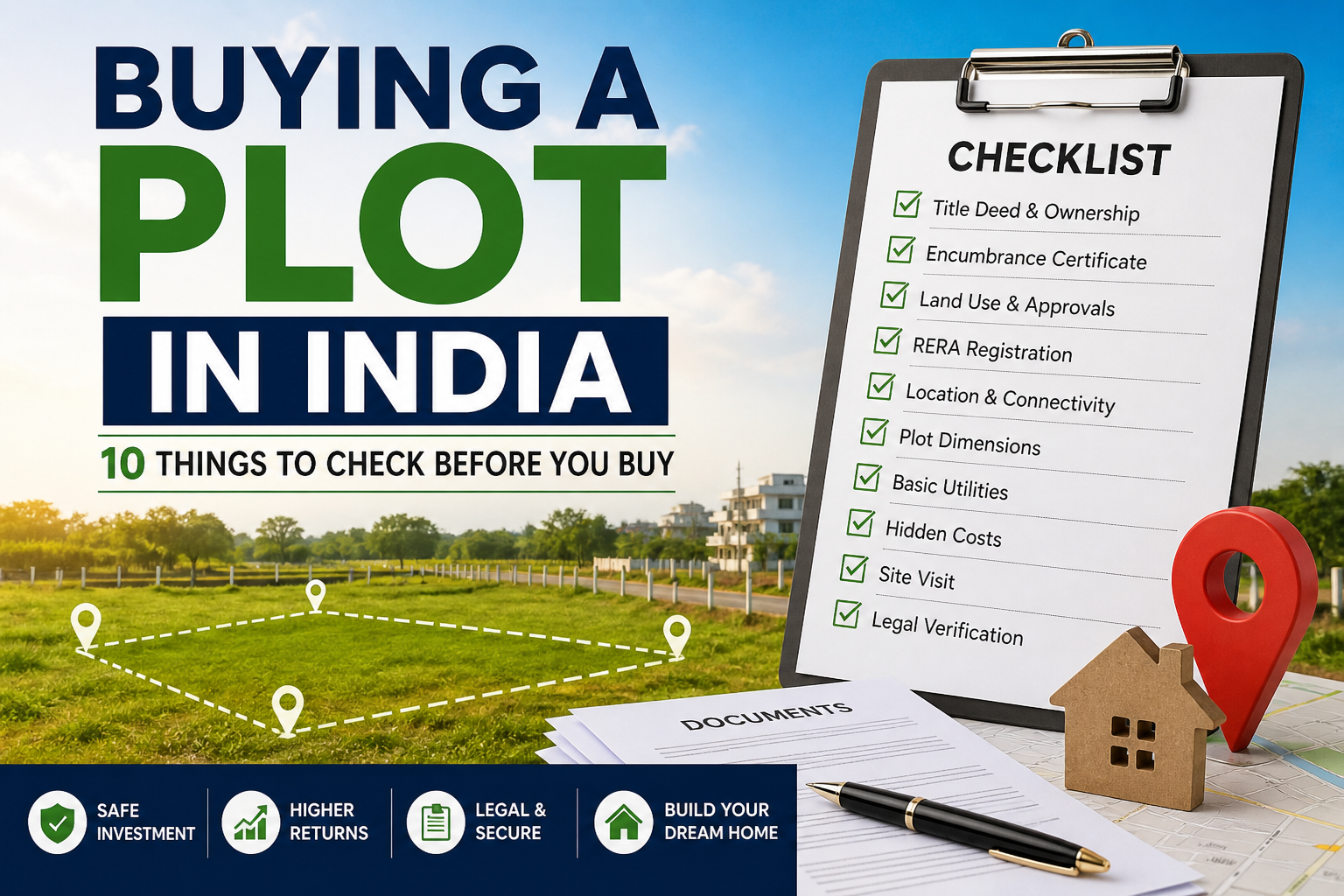
Buying a plot in India is one of the most rewarding yet sensitive real estate investments you can make. Unlike ready-to-move apartments, purchasing land gives you complete freedom to design and build your dream home—but it also comes with higher responsibility and due diligence. From legal verification to location analysis, every step plays a crucial role in ensuring a safe and profitable investment.
In 2026, with rapid infrastructure growth across regions like Delhi NCR, Yamuna Expressway, and emerging Tier-2 cities, plot investments are gaining massive popularity among homebuyers and investors. However, many buyers still fall into common traps such as unclear land titles, missing approvals, or hidden costs—leading to financial losses and legal complications.
This guide, “10 Things to Check Before Buying a Plot in India,” is designed to help you make an informed decision. Whether you are a first-time buyer or a seasoned investor, understanding these essential factors will protect your investment, ensure legal safety, and maximize future returns.
By the end of this guide, you’ll have a clear checklist to confidently evaluate any plot before making a purchase.
10 Things to Check Before Buying a Plot in India
1. Check the Legal Title of the Land
One of the most critical steps before buying any plot in India is verifying the legal title of the land. A clear and marketable title ensures that the seller has full ownership rights and the authority to sell the property. Ignoring this step can lead to serious legal disputes, financial loss, or even cancellation of ownership in the future.
What is a Clear Title?
A clear title means the property is free from any legal disputes, claims, or encumbrances. The seller should be the rightful owner, and the ownership history should be clean and traceable.
How to Verify Ownership
- Ask for the original Title Deed and verify the seller’s name.
- Check the chain of ownership (previous owners) for at least 10–15 years.
- Match details with government land records to ensure authenticity.
- Hire a legal expert or property lawyer for proper verification.
Check for Encumbrance Certificate (EC)
The Encumbrance Certificate confirms that the land is free from loans, mortgages, or legal dues. Always obtain an EC for the past 10–15 years from the local sub-registrar office.
Verify Land Type
Ensure the land is classified correctly (residential, commercial, or agricultural). Buying agricultural land for residential purposes without proper conversion can create legal issues.
Why It Matters
A plot with a disputed or unclear title can:
- Delay construction approvals
- Lead to legal battles
- Reduce resale value
- Cause financial losses
Pro Tip: Never rely only on verbal confirmation or photocopies. Always verify original documents and consult a professional before finalizing the deal.
Ensuring a clear legal title is the foundation of a safe and secure property investment.
2. Verify Land Use and Zoning Regulations
Before purchasing a plot, it’s essential to confirm how the land is legally allowed to be used. Not every plot can be used for residential purposes, and ignoring zoning rules can lead to construction bans or legal penalties later.
What Are Land Use and Zoning Regulations?
Zoning regulations are rules set by local authorities that define whether a plot can be used for residential, commercial, industrial, or agricultural purposes. These rules also control building height, density, and usage.
Check the Land Classification
- Ensure the plot is approved for residential use if you plan to build a home.
- Avoid buying agricultural land unless it has been legally converted (land use conversion).
- For investment purposes, confirm if commercial usage is permitted.
Verify with Local Authorities
- Check approvals from local development authorities like NOIDA Authority, GNIDA, or other regional bodies.
- Confirm whether the plot falls under a master plan or planned development area.
- Make sure the project complies with RERA guidelines (if applicable).
Understand Floor Area Ratio (FAR) & Building Norms
Zoning laws also define:
- FAR (Floor Area Ratio) – how much construction is allowed
- Height restrictions
- Open space requirements
Knowing these helps you plan future construction properly.
Why It Matters
If zoning regulations are ignored:
- Your construction can be declared illegal
- You may face penalties or demolition notices
- Loan approvals can get rejected
- Resale value may drop significantly
Pro Tip: Always get written confirmation of land use from the concerned authority instead of relying on the developer’s claims.
Verifying land use and zoning regulations ensures your plot is legally fit for your intended purpose and protects your investment in the long run.
3. Ensure Proper Approval (RERA/Local Authority)
Before finalizing any plot purchase, make sure the project or land has all the necessary approvals from government authorities. This step protects you from fraud, illegal layouts, and future legal complications.
Why Approvals Are Important
Approved plots follow proper planning norms, legal guidelines, and infrastructure standards. Unapproved plots may look cheaper but can lead to serious risks like demolition notices, lack of basic facilities, or resale issues.
Check RERA Registration
Under the Real Estate Regulatory Authority, most plotted developments (especially in large projects) must be registered.
- Visit your state’s RERA website
- Search the project using its registration number
- Verify details like developer name, layout plan, and approvals
👉 If a project is not RERA-approved (where applicable), proceed with caution.
Verify Local Authority Approvals
Depending on the location, check approvals from relevant authorities such as:
- NOIDA Authority / GNIDA (Greater Noida)
- Local Municipal Corporation
- Development Authorities or Town Planning Departments
These approvals ensure the layout, roads, drainage, and infrastructure are legally planned.
Layout Plan Approval
Make sure the plot is part of an approved layout plan, which includes:
- Proper road access
- Open spaces and amenities
- Clearly marked plot boundaries
Avoid buying plots in unauthorized colonies or illegal subdivisions.
Check for NOCs (No Objection Certificates)
Ensure the developer has obtained required NOCs such as:
- Environmental clearance
- Water and electricity approvals
- Fire safety clearance (if applicable)
Why It Matters
Buying a plot without proper approvals can result in:
- Legal disputes or government action
- Difficulty in getting home loans
- Problems in construction approvals
- Low resale value
Pro Tip: Always cross-check approvals on official government websites instead of relying solely on brochures or sales teams.
Ensuring proper approvals gives you peace of mind and guarantees that your investment is safe, legal, and future-ready.
4. Access to Basic Infrastructure and Connectivity
A plot’s true value is not just in its size or price—it largely depends on the infrastructure and connectivity around it. Even a legally perfect plot can become a poor investment if it lacks proper access or essential facilities.
Check Road Connectivity
- Ensure the plot has clear road access (preferably a wide, motorable road).
- Look for proximity to main highways, expressways, or arterial roads.
- Corner plots or plots on wider roads often have better value and usability.
Public Transport Availability
- Check availability of metro stations, bus stops, or railway stations nearby.
- Good connectivity to major areas (like business hubs or city centers) increases convenience and resale value.
Nearby Social Infrastructure
A good location should have easy access to:
- Schools and colleges
- Hospitals and healthcare centers
- Markets, malls, and daily needs stores
- Banks and ATMs
These facilities make the area livable and attractive for future buyers.
Future Infrastructure Development
- Check upcoming projects like metro expansion, highways, or commercial hubs.
- Areas near developing infrastructure (like expressways or industrial corridors) often see high appreciation.
Internal Infrastructure (for Gated Plots)
If you’re buying in a plotted development, verify:
- Internal roads and street lighting
- Drainage system
- Security and gated access
Why It Matters
Poor connectivity or lack of infrastructure can:
- Reduce property value
- Make daily living inconvenient
- Delay area development
- Lower rental and resale demand
Pro Tip: Visit the site at different times of the day to check real traffic conditions and accessibility.
Good infrastructure and connectivity not only improve your quality of life but also ensure strong long-term returns on your investment.
5. Verify Plot Dimensions and Layout Plan
Before buying a plot, it’s crucial to confirm that the actual size, shape, and boundaries match what is promised in the documents and site plan. Even small discrepancies can create legal issues or construction problems later.
Check the Exact Plot Size
- Verify the area mentioned in documents (in sq. yards, sq. meters, or sq. feet).
- Physically measure the plot if possible or get it checked by a surveyor.
- Ensure there is no mismatch between registry papers and actual site dimensions.
Understand Plot Shape and Facing
- Regular shapes (square or rectangular) are easier for construction and better for resale.
- Irregular plots may lead to wasted space and design limitations.
- Some buyers also consider Vastu-compliant facing (east/north-facing plots are often preferred).
Approved Layout Plan
- Always check if the plot is part of an approved layout plan.
- The layout should clearly show:
- Roads and access points
- Plot numbers and boundaries
- Parks, open spaces, and amenities
Boundary and Demarcation
- Ensure the plot is properly marked on the ground with boundary lines or fencing.
- Avoid plots with unclear or disputed boundaries.
Check for Encroachments
- Make sure no part of the plot is:
- Occupied by others
- Falling under road widening plans
- Affected by government acquisition
Why It Matters
Incorrect dimensions or layout issues can:
- Create legal disputes with neighbors
- Delay construction approvals
- Reduce usable space
- Affect resale value
Pro Tip: Always cross-verify the layout plan with local authority approvals and don’t rely only on brochures or marketing maps.
Verifying plot dimensions and layout ensures that what you see is exactly what you get—making your investment safe and hassle-free.
6. Check for Encumbrances and Liabilities
Before buying any plot, you must ensure that the land is free from financial or legal burdens. Encumbrances can include loans, mortgages, unpaid dues, or legal disputes attached to the property. Ignoring this step can put your entire investment at risk.
What Are Encumbrances?
Encumbrances are any claims, charges, or liabilities on the property that may affect ownership. These can be:
- Bank loans or mortgages
- Legal disputes or court cases
- Unpaid property taxes or utility dues
- Easement rights (right of way for others)
Check the Encumbrance Certificate (EC)
The Encumbrance Certificate (EC) is the most important document to verify:
- It shows all registered transactions related to the property
- Confirms whether the land is free from loans or liabilities
- Ideally, check EC records for the last 10–15 years
You can obtain it from the Sub-Registrar Office or online (in many states).
Verify Bank Approvals (If Any)
- If a bank has approved loans for the project, it indicates basic legal verification
- However, don’t rely only on bank approval—do your own checks
Check for Outstanding Dues
- Ensure all property taxes, water bills, and electricity dues are cleared
- Ask for receipts and payment proofs from the seller
Look for Legal Disputes
- Confirm that the land is not involved in any ongoing litigation
- A lawyer can help verify court records if needed
Why It Matters
Buying a plot with encumbrances can:
- Transfer liabilities to you as the new owner
- Lead to legal notices or property seizure
- Create problems during resale or loan approval
Pro Tip: Always get a No Dues Certificate and consult a property lawyer for a final legal check before making payment.
Ensuring the plot is free from encumbrances and liabilities safeguards your investment and gives you complete ownership without future complications.
7. Water, Electricity, and Sewage Facilities
Basic utilities are the backbone of any livable property. Before buying a plot, make sure that essential services like water supply, electricity, and sewage systems are either already available or planned for the near future.
Water Availability
- Check if the area has a regular water supply (municipal or borewell).
- Confirm groundwater availability if you plan to install a borewell.
- In some areas, water scarcity can become a major issue over time.
Electricity Connection
- Ensure that electric poles and connections are available near the plot.
- Verify if the area has a stable power supply or frequent outages.
- Check if getting a new connection is easy and legally approved.
Sewage and Drainage System
- Look for a proper sewage system or drainage network.
- In developing areas, absence of drainage can lead to waterlogging and sanitation issues.
- For plotted developments, confirm if underground drainage is part of the project plan.
Other Utility Services
- Availability of internet, gas pipelines, and waste management can also add value.
- These facilities improve both livability and resale potential.
Why It Matters
Lack of basic utilities can:
- Delay construction and occupancy
- Increase your setup costs
- Reduce property value
- Create long-term living problems
Pro Tip: Don’t rely only on future promises. Visit the site and check actual ground-level availability of these services.
Having proper water, electricity, and sewage facilities ensures that your plot is not just an investment—but a practical and comfortable place to live in the future.
8. Surrounding Development and Future Growth Potential
When buying a plot, don’t just look at its current condition—focus on what’s coming around it in the future. The surrounding development and growth potential of an area play a major role in determining your property’s appreciation, demand, and long-term returns.
Check Existing Development Nearby
- Look for residential societies, commercial spaces, and retail hubs nearby
- Presence of developed neighborhoods indicates livability and demand
- Avoid completely isolated areas unless strong future development is confirmed
Proximity to Employment Hubs
- Areas near IT parks, industrial zones, and business districts see higher demand
- Job opportunities attract more people, increasing both rental and resale value
Upcoming Infrastructure Projects
- Check for planned developments like:
- Expressways and highways
- Metro lines
- Airports or commercial corridors
Infrastructure projects significantly boost property demand and prices by improving connectivity and accessibility
Government Plans & Master Development
- Study the city master plan or future zoning plans
- Government investment in infrastructure signals long-term growth potential and investor confidence
Demand & Appreciation Potential
- Properties in developing areas often give higher returns over time
- Early investment in growth corridors can lead to strong appreciation as demand increases
As experts say, the real opportunity lies in identifying areas before infrastructure is fully developed, not after prices have already risen
Why It Matters
Ignoring future growth factors can:
- Limit your property’s appreciation
- Reduce resale demand
- Delay returns on investment
On the other hand, choosing a high-growth location can:
- Multiply your investment value
- Ensure better resale and rental demand
- Provide long-term financial security
Pro Tip: Don’t just buy based on today’s price—buy based on tomorrow’s potential.
Understanding surrounding development and future growth ensures you invest in a location that grows with time, giving you maximum returns and peace of mind.
Leave a Reply