
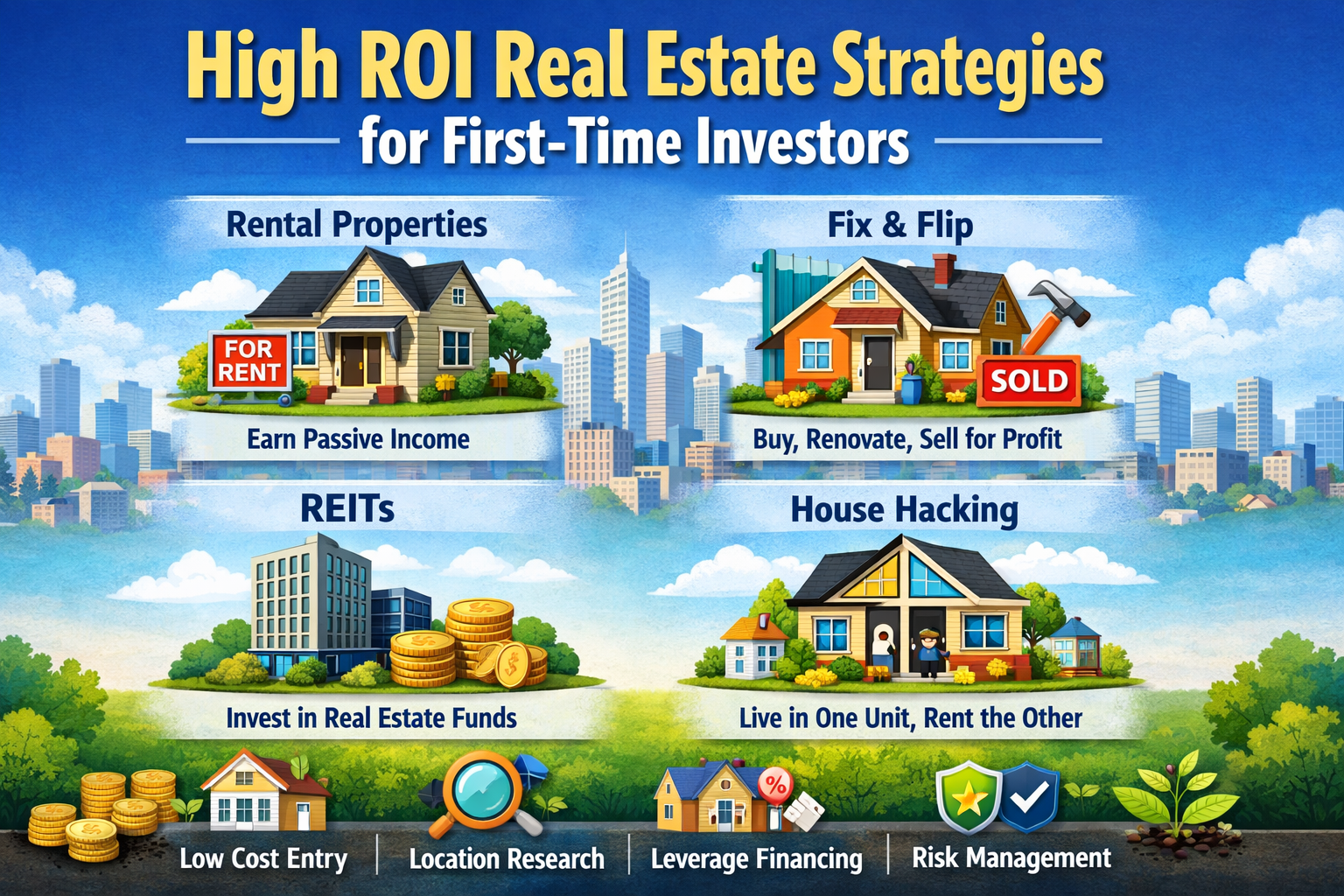
Real estate has long been considered one of the safest and most rewarding investment options, especially for those looking to build long-term wealth. For first-time investors, however, entering the real estate market can feel overwhelming. With rising property prices, fluctuating interest rates, and countless project options available, making the right decision becomes critical. This is where the concept of High ROI (Return on Investment) becomes extremely important.
For first-time investors, real estate is not just about owning property—it is about making a smart financial move that delivers consistent returns, capital appreciation, and long-term security. Unlike seasoned investors who may have the experience to absorb risks, first-time buyers need well-planned strategies that minimize risk while maximizing returns. Understanding how to identify high-ROI opportunities can make the difference between an average investment and a highly profitable one.
One of the biggest advantages of real estate is its ability to generate wealth through multiple income streams. Investors benefit not only from property price appreciation but also from rental income, tax benefits, and leverage through home loans. When executed correctly, real estate investment can outperform many traditional investment instruments such as fixed deposits, bonds, or even equity markets over the long term. However, achieving high ROI requires careful planning, market research, and strategic decision-making—especially for first-time investors.
In recent years, the Indian real estate market has undergone a major transformation. Regulatory reforms like RERA, improved transparency, digitization of land records, and the growing presence of branded developers have significantly reduced investment risks. At the same time, infrastructure growth—such as expressways, metro expansions, airports, and industrial corridors—has created new real estate hotspots offering exceptional appreciation potential. For first-time investors, this presents a unique opportunity to enter the market at the right time and capitalize on emerging growth corridors.
Another important factor driving high ROI in real estate is changing buyer preferences. Today’s buyers are looking for better lifestyle amenities, secure gated communities, sustainable developments, and smart homes. This shift has increased demand for quality residential projects, especially in well-connected suburban and peripheral locations. First-time investors who understand these trends can strategically invest in properties that are more likely to appreciate faster and attract strong rental demand.
It is also important to note that high ROI does not always mean investing in expensive or luxury properties. Many first-time investors mistakenly believe that only premium properties offer strong returns. In reality, affordable and mid-segment properties in emerging locations often deliver higher ROI due to lower entry costs and faster appreciation. Similarly, plotted developments, pre-launch projects, and under-construction properties—when chosen wisely—can offer significant gains over time.
For first-time investors, risk management plays a crucial role in achieving high returns. Factors such as project delays, legal issues, poor construction quality, or lack of infrastructure can negatively impact ROI. This is why understanding the importance of investing in RERA-approved projects, choosing reputed developers, and conducting thorough due diligence is essential. A well-informed investor is always better positioned to protect their capital and maximize returns.
Financing is another key aspect that influences ROI. Smart use of home loans can significantly enhance returns through leverage, allowing investors to own high-value assets with limited upfront capital. However, poor loan planning or overleveraging can reduce profitability. First-time investors must understand interest rates, loan tenure, EMI impact, and tax benefits to structure their investment in a way that supports long-term financial growth.
Rental income is often overlooked by new investors, but it plays a vital role in improving overall ROI. A property located in a high-demand rental market—such as near IT hubs, business districts, universities, or industrial zones—can generate steady monthly income while the property value appreciates. For first-time investors, rental income can help offset EMIs and reduce holding costs, making the investment more sustainable.
Timing the market is another strategic element that can significantly impact returns. While no one can perfectly predict market cycles, first-time investors can benefit greatly from investing during pre-launch phases, early development stages, or market corrections. Properties purchased at the right time often witness sharp appreciation once infrastructure development and occupancy increase.
Moreover, real estate is a long-term asset class that rewards patience and strategic holding. First-time investors should approach real estate with a clear investment horizon, defined goals, and a well-planned exit strategy. Whether the goal is capital appreciation, rental yield, or asset creation for future security, aligning the investment with personal financial objectives is essential for achieving high ROI.
In today’s digital age, access to information has made real estate investing more transparent than ever. Online property portals, virtual site visits, market reports, and expert insights allow first-time investors to make informed decisions. However, information overload can also lead to confusion. This makes it even more important to follow proven real estate investment strategies rather than emotional or impulsive decisions.
This guide on High ROI Real Estate Strategies for First-Time Investors is designed to help new investors navigate the real estate market with confidence. It focuses on practical, proven, and market-relevant strategies that reduce risk while maximizing returns. From choosing the right location and property type to understanding financing, rental income, and exit planning, this article will equip first-time investors with the knowledge needed to make smart and profitable real estate decisions.
For anyone planning their first real estate investment, understanding these strategies is not optional—it is essential. With the right approach, real estate can become a powerful wealth-building tool, offering financial stability, consistent income, and impressive long-term returns.
Also Read: Why Yamuna Expressway Is the Next Property Investment Hotspot
Understanding ROI in Real Estate Investment
For first-time investors, understanding ROI is the foundation of making profitable real estate decisions. ROI, or Return on Investment, helps investors evaluate how effectively their money is working for them. In real estate, ROI goes beyond just buying a property at a low price and selling it higher—it reflects the overall profitability of an investment over time.
Unlike short-term investment instruments, real estate ROI is typically calculated over a longer holding period and includes multiple income sources. These may include property value appreciation, rental income, tax benefits, and even savings achieved through leverage. A clear understanding of ROI allows first-time investors to compare different properties, locations, and investment strategies with confidence.
A high ROI indicates that the investment is generating strong returns relative to its cost, while a low ROI suggests that the capital may be underperforming. For new investors with limited capital, focusing on ROI ensures smarter allocation of funds and better long-term financial outcomes.
What Is ROI and Why It Matters
ROI in real estate is a performance metric that measures the profitability of a property investment. It is generally expressed as a percentage and calculated by dividing the net profit earned from the investment by the total amount invested. Net profit may include rental income, price appreciation, and tax savings, minus expenses such as maintenance costs, loan interest, property taxes, and management fees.
For first-time investors, ROI matters because it provides clarity and direction. Instead of making decisions based on emotions, brand names, or market hype, ROI offers a data-driven way to assess whether a property is worth investing in. A property with high appreciation potential but poor rental yield may not deliver strong ROI in the short term, while a rental-heavy investment may provide steady income but slower capital growth.
Understanding ROI also helps investors set realistic expectations. Real estate is not a “get-rich-quick” scheme, but when planned strategically, it offers stable and compounding returns. By focusing on ROI, first-time investors can align their investment decisions with financial goals such as wealth creation, passive income, or future security.
Another reason ROI is crucial is its role in risk management. Properties with consistent rental demand and strong resale potential often deliver more stable ROI, reducing the risk of losses during market fluctuations. For first-time investors, this stability is extremely valuable.
Factors That Influence Real Estate ROI
Several factors directly impact the ROI of a real estate investment, and understanding them helps first-time investors make informed choices.
Location is the most significant factor influencing ROI. Properties located near infrastructure developments such as expressways, metro stations, business hubs, and upcoming airports tend to appreciate faster and attract higher rental demand. Emerging locations often offer better ROI than fully developed areas due to lower entry costs and higher growth potential.
Property type also plays a vital role in ROI performance. Residential apartments, plotted developments, villas, and commercial properties all offer different return profiles. While apartments may provide steady rental income, plots often deliver higher long-term appreciation. Choosing the right property type depends on budget, investment horizon, and risk tolerance.
Purchase price and entry timing significantly affect ROI. Buying during pre-launch phases, early construction stages, or market corrections often allows investors to secure properties at lower prices, resulting in higher returns when prices rise.
Rental yield is another key contributor to ROI. Properties located near employment centers, educational institutions, or industrial zones usually offer strong rental demand. Consistent rental income not only boosts ROI but also helps cover EMIs and maintenance costs.
Developer reputation and project quality impact both appreciation and resale value. Projects by reputed, RERA-approved developers tend to command higher demand, better construction quality, and smoother resale processes, all of which contribute to higher ROI.
Financing and loan structure also influence overall returns. Smart use of home loans can enhance ROI through leverage, but high interest rates or long loan tenures may reduce profitability. First-time investors must balance loan benefits with repayment capacity.
Market conditions and economic trends play an important role as well. Interest rates, government policies, tax regulations, and overall economic growth can directly impact property prices and rental demand.
In conclusion, ROI in real estate is influenced by a combination of strategic planning, market understanding, and long-term vision. First-time investors who evaluate these factors carefully are far more likely to achieve strong and sustainable returns from their real estate investments.
Also Read: What Is RERA and Why It Is Important for Property Buyers?
Choosing the Right Location for Maximum Returns
Location is the single most important factor that determines the success of a real estate investment. For first-time investors aiming for high ROI, choosing the right location can significantly impact property appreciation, rental income, and resale value. Even a high-quality property may fail to deliver good returns if it is located in an area with poor connectivity or limited growth potential.
A strong location is not just about current development—it is about future growth prospects. Smart investors analyze infrastructure plans, employment opportunities, and urban expansion trends before making a purchase. Properties in well-planned growth corridors often outperform those in saturated or stagnant areas.
Understanding how location dynamics work allows first-time investors to enter the market early, secure properties at competitive prices, and benefit from long-term capital appreciation.
Infrastructure Growth and Connectivity
Infrastructure development is one of the strongest drivers of real estate price appreciation. Projects such as expressways, metro lines, airports, flyovers, and industrial corridors directly increase accessibility and demand for nearby properties. Areas that were once considered peripheral often turn into high-demand real estate zones once major infrastructure becomes operational.
Good connectivity reduces travel time, improves lifestyle convenience, and attracts both end-users and tenants. For investors, this translates into higher rental demand and faster price appreciation. Properties located near metro stations, highway exits, and transit hubs typically command premium pricing over time.
First-time investors should focus on locations where infrastructure projects are approved or under construction, rather than areas where development is already fully priced in. Early investment in such locations often results in superior ROI as infrastructure becomes functional and demand rises.
Emerging vs Established Locations
One of the most common dilemmas for first-time investors is choosing between emerging and established locations. Established areas offer stability, ready infrastructure, and immediate rental income, but they often come with high property prices and limited appreciation potential.
Emerging locations, on the other hand, offer lower entry costs and significantly higher growth potential. These areas usually benefit from upcoming infrastructure, planned commercial developments, and urban expansion. While rental demand may be moderate initially, appreciation potential is usually much higher over the long term.
For first-time investors with a medium to long-term investment horizon, emerging locations often provide better ROI. The key is to choose emerging areas backed by government infrastructure plans, reputable developers, and increasing population movement. Balancing risk and reward is essential—well-researched emerging locations can outperform mature markets in terms of returns.
Importance of Job Hubs and Commercial Zones
Employment generation is a major factor that fuels real estate demand. Areas located near IT parks, business districts, industrial zones, and corporate hubs experience consistent housing demand from professionals, executives, and migrant workers.
Properties near job hubs offer strong rental yields due to continuous tenant demand. This makes them particularly attractive for first-time investors looking for steady cash flow along with long-term appreciation. Proximity to commercial zones also enhances resale value, as end-users prioritize shorter commute times and better work-life balance.
Commercial and mixed-use developments further strengthen local economies by attracting retail outlets, healthcare facilities, schools, and entertainment zones. Such self-sustaining ecosystems drive long-term property value growth and reduce vacancy risks.
In summary, locations supported by infrastructure growth, emerging development potential, and strong employment centers offer the highest ROI opportunities. First-time investors who prioritize these factors can significantly improve their chances of building a profitable and sustainable real estate portfolio.
Also Read: Flat vs Plot – Which Is a Better Investment in India?
Best Property Types for First-Time Investors
Choosing the right property type is just as important as selecting the right location when aiming for high ROI. First-time investors often make the mistake of following market trends without understanding which property category aligns best with their budget, risk appetite, and investment goals. Each property type—apartments, plots, residential, or commercial—offers a different return profile.
A well-chosen property type can provide stable rental income, strong appreciation, or a balance of both. For first-time investors, the key is to start with assets that offer lower risk, better liquidity, and predictable returns.
Apartments vs Plots – Which Gives Better ROI?
Apartments and plots are two of the most popular choices among first-time investors, but they serve different investment objectives.
Flats generally offer quicker rental income and easier management. They are ideal for investors looking for regular cash flow, especially when located near job hubs or urban centers. Apartments also require lower initial capital compared to large land parcels and are easier to finance through home loans. However, apartment appreciation can be slower over time due to factors like building age and maintenance costs.
Plots, on the other hand, are known for strong long-term appreciation. Land is a limited asset, and its value tends to increase steadily as urbanization expands. Plots usually have no maintenance costs and offer flexibility for future construction or resale. While plots may not generate immediate rental income, they often deliver higher ROI over a longer holding period.
For first-time investors, apartments are suitable for short- to medium-term returns, while plots are ideal for those with a long-term investment horizon and higher risk tolerance.
Ready-to-Move vs Under-Construction Properties
Another crucial decision for first-time investors is choosing between ready-to-move and under-construction properties.
Ready-to-move properties offer immediate possession and instant rental income. They eliminate the risk of project delays and provide clarity on construction quality and neighborhood development. These properties are ideal for investors seeking stability and lower risk. However, ready-to-move properties are usually priced higher, which may limit appreciation potential.
Under-construction properties are often available at lower prices and offer better appreciation potential, especially if purchased during pre-launch or early construction phases. As the project progresses and infrastructure develops, property value typically increases. However, investors must carefully assess developer credibility, RERA approval, and project timelines to minimize risk.
For first-time investors, under-construction properties by reputed developers can offer higher ROI, while ready-to-move properties provide safety and immediate income.
Residential vs Commercial Real Estate
Residential and commercial real estate serve different investment purposes and come with varying risk-reward ratios.
Real estate is generally considered safer and more suitable for first-time investors. Demand for housing remains consistent, and residential properties are easier to rent and resell. Financing options are widely available, and legal processes are relatively straightforward.
Commercial real estate, such as office spaces, retail shops, and co-working units, can offer higher rental yields compared to residential properties. However, commercial investments usually require higher capital, longer vacancy risks, and deeper market understanding. Lease structures and maintenance responsibilities can also be more complex.
For first-time investors, residential properties are typically the better starting point due to lower risk and higher liquidity. Commercial real estate may be considered later once investors gain experience and financial stability.
In conclusion, selecting the right property type plays a vital role in maximizing ROI. First-time investors should align their choice with financial goals, risk tolerance, and investment horizon to build a strong and profitable real estate portfolio.
Also Read: Things to Check Before Buying Property in India – A Complete Buyer’s Checklist
Budget Planning and Smart Financing
For first-time investors, budget planning and financing decisions can significantly influence overall ROI. Many new investors focus only on property prices and overlook the long-term financial commitment involved in real estate investment. Smart budgeting ensures financial stability, prevents overleveraging, and helps investors sustain their investment until returns are realized.
A well-planned budget not only determines what type of property you can afford but also impacts loan eligibility, rental yield, holding costs, and future resale value. Strategic financing, when used correctly, can enhance returns and make real estate investment more efficient.
Setting a Realistic Investment Budget
The first step toward a successful real estate investment is setting a realistic and well-defined budget. First-time investors should evaluate their total financial capacity, including savings, monthly income, existing liabilities, and emergency funds. Investing beyond financial comfort can lead to stress and long-term financial strain.
A practical budget should include the down payment, registration charges, taxes, furnishing costs, and a buffer for unexpected expenses. Experts recommend keeping EMIs within a manageable percentage of monthly income to maintain cash flow stability.
It is also important to align the budget with investment goals. Investors seeking rental income may prioritize affordability and rental demand, while those targeting capital appreciation may allocate funds toward emerging locations. A disciplined budgeting approach helps investors make confident and sustainable investment decisions.
Home Loans and Interest Rate Considerations
Home loans play a crucial role in real estate investment by allowing investors to leverage borrowed capital to acquire higher-value assets. While leverage can enhance ROI, poor loan planning can reduce profitability.
First-time investors should carefully evaluate interest rates, loan tenure, and EMI structure before finalizing a loan. Even small differences in interest rates can significantly impact total repayment over time. Fixed-rate loans offer stability, while floating-rate loans may benefit from future rate reductions.
Loan tenure should balance affordability and interest outflow. Longer tenures reduce EMIs but increase overall interest costs, whereas shorter tenures result in higher EMIs but lower interest burden. Additionally, investors should consider tax benefits on home loan interest and principal repayment, as these can improve net returns.
Comparing loan offers from multiple lenders and understanding prepayment and foreclosure terms can further optimize financing decisions.
Hidden Costs First-Time Investors Must Know
One of the most common mistakes first-time investors make is ignoring hidden and additional costs associated with property purchase. These expenses can significantly affect ROI if not planned in advance.
Registration charges, stamp duty, GST (for under-construction properties), brokerage fees, legal charges, and maintenance deposits should be factored into the total investment cost. Additionally, ongoing expenses such as property tax, society maintenance, insurance, and repair costs can impact net rental income.
For investors planning to rent out the property, vacancy periods and tenant turnover costs must also be considered. Even a few months of vacancy can reduce annual returns.
Understanding and planning for these hidden costs ensures accurate ROI calculation and prevents unpleasant financial surprises. A transparent cost assessment allows first-time investors to make informed decisions and maintain long-term financial health.
In summary, effective budget planning and smart financing are essential for maximizing real estate returns. First-time investors who manage their finances wisely are better positioned to achieve stable cash flow, long-term appreciation, and sustainable wealth creation.
Also Read: Christmas Special: Why the Festive Season Is the Perfect Time to Invest in Real Estate
Investing with Trusted and Branded Developers
For first-time investors, choosing the right developer is just as important as selecting the right property and location. A well-known and trusted developer significantly reduces investment risk and improves the chances of achieving high ROI. Many new investors underestimate the importance of developer credibility and focus solely on pricing or amenities, which can lead to costly mistakes.
Branded developers bring experience, financial stability, and professional execution to real estate projects. Their ability to deliver quality projects on time and maintain transparency plays a crucial role in protecting investor capital and ensuring long-term value.
Why Branded Developers Reduce Risk
Branded developers have a proven track record of successful project delivery, which reduces the risk of delays, construction issues, and legal disputes. Their established reputation encourages adherence to timelines, quality standards, and regulatory norms.
Projects by reputed developers often attract stronger buyer and tenant demand, leading to better resale value and rental yields. Banks and financial institutions are also more willing to provide home loans for branded projects, improving liquidity and ease of financing for investors.
Additionally, branded developers typically offer better construction quality, professional property management, and well-maintained amenities. These factors contribute to higher long-term appreciation and lower maintenance-related expenses, enhancing overall ROI.
For first-time investors, partnering with a trusted developer offers peace of mind and protects against common risks such as project abandonment or compromised quality.
Importance of RERA-Approved Projects
RERA (Real Estate Regulatory Authority) approval has transformed the Indian real estate sector by increasing transparency and accountability. Investing in RERA-approved projects is essential for first-time investors seeking safe and reliable returns.
RERA mandates developers to disclose project details, timelines, approvals, and financial information, ensuring greater transparency. It also enforces strict penalties for delays and non-compliance, offering legal protection to buyers and investors.
RERA-approved projects reduce the risk of false promises, hidden charges, and delayed possession. They also improve investor confidence, making resale easier and enhancing market credibility.
For first-time investors, choosing a RERA-registered project ensures compliance, legal safety, and long-term investment security. When combined with a trusted developer, RERA approval significantly increases the likelihood of achieving high ROI with minimal risk.
In conclusion, investing with branded developers and prioritizing RERA-approved projects is a smart strategy for first-time investors. This approach safeguards capital, improves market trust, and lays a strong foundation for sustainable real estate returns.
Also Read: AU Leisure Valley – Premium Luxury Living in Greater Noida West
Timing the Market for Higher Returns
Timing plays a crucial role in determining the success of a real estate investment. While real estate is fundamentally a long-term asset, entering the market at the right time can significantly improve ROI. First-time investors often hesitate, waiting for the “perfect” moment, but smart timing is about understanding market signals rather than predicting exact price bottoms.
Investing at the right stage of a project or market cycle can help investors secure properties at lower prices and benefit from appreciation as demand rises. Strategic timing, combined with strong fundamentals, allows first-time investors to maximize returns while minimizing risk.
Pre-Launch and Early-Bird Investment Benefits
Pre-launch and early-bird investments are among the most effective strategies for achieving high ROI in real estate. During these stages, developers typically offer properties at discounted prices to attract early buyers and generate project momentum. These lower entry prices create immediate appreciation potential as the project progresses.
Early investors benefit from price escalation as construction advances, infrastructure develops, and buyer confidence increases. In many cases, property values rise substantially between pre-launch and possession stages, offering attractive capital gains.
However, first-time investors should approach pre-launch opportunities with caution. It is essential to invest only in projects by reputed, RERA-approved developers with clear approvals and transparent timelines. When chosen wisely, early-stage investments can deliver some of the highest returns in real estate.
Market Cycles and Price Appreciation
Real estate markets operate in cycles, typically moving through phases of growth, stability, correction, and recovery. Understanding these cycles helps first-time investors identify the best time to enter the market.
Buying during early growth or recovery phases often results in stronger appreciation, as demand increases and prices begin to rise. Conversely, investing during peak phases may limit upside potential due to already inflated prices.
Market cycles are influenced by factors such as interest rates, economic growth, government policies, and infrastructure development. While short-term fluctuations are common, long-term trends usually favor investors who enter at reasonable valuations and hold assets through growth phases.
For first-time investors, focusing on fundamentals rather than short-term market noise is key. Strategic entry during early stages of development or favorable market conditions can significantly enhance long-term ROI.
In summary, timing the market effectively allows first-time investors to capture appreciation at the right moment. By leveraging pre-launch opportunities and understanding market cycles, investors can position themselves for higher returns and long-term success in real estate.
Also Read: Ivory County Sector 115 Noida – A Perfect Blend of Luxury & Location
Rental Income Strategy for Stable ROI
Rental income is one of the most reliable ways to achieve stable and predictable ROI in real estate. For first-time investors, rental income not only provides monthly cash flow but also helps offset EMIs, maintenance costs, and holding expenses. A well-planned rental strategy reduces financial pressure and improves overall investment sustainability.
While capital appreciation builds wealth over time, rental income ensures liquidity and consistency. Investors who balance both elements are better positioned to manage market fluctuations and maximize long-term returns.
Choosing High Rental Demand Locations
Location plays a decisive role in determining rental demand. Properties situated near employment hubs, IT parks, business districts, educational institutions, hospitals, and industrial zones tend to attract a steady flow of tenants. Professionals, students, and working families prioritize convenience and shorter commute times, making such locations ideal for rental investments.
Connectivity also influences rental demand. Areas with metro access, expressways, and public transport options typically experience higher occupancy rates. Social infrastructure such as schools, shopping centers, healthcare facilities, and entertainment zones further strengthens tenant appeal.
For first-time investors, selecting locations with consistent rental demand minimizes vacancy risk and ensures steady income. Investing in areas with growing population inflow and economic activity improves rental stability and long-term ROI.
Short-Term vs Long-Term Rental Strategy
Choosing between short-term and long-term rental strategies depends on investment goals, risk tolerance, and property location.
Long-term rentals offer stability and lower management effort. Fixed leases provide predictable monthly income and reduce tenant turnover. This strategy is ideal for first-time investors seeking consistent cash flow and minimal operational involvement.
Short-term rentals, such as serviced apartments or holiday rentals, can generate higher rental yields in prime or tourist-heavy locations. However, they involve higher management costs, frequent tenant changes, and regulatory considerations. Income from short-term rentals may fluctuate based on seasonality and market conditions.
For first-time investors, long-term rentals are generally the safer and more manageable option. Once experience and confidence grow, short-term rental strategies can be explored for higher returns.
In conclusion, a strong rental income strategy adds stability to real estate investments. By choosing high-demand locations and adopting the right rental approach, first-time investors can achieve consistent cash flow and improve overall ROI.
Also Read: Top 10 Mistakes to Avoid While Buying a Flat in India
Legal Due Diligence for Safe Investment
Legal due diligence is a critical step in real estate investment that first-time buyers often underestimate. Even a property with strong location advantages and high appreciation potential can become a poor investment if legal aspects are overlooked. Ensuring legal clarity protects investors from future disputes, financial losses, and project delays.
A legally sound property not only safeguards capital but also improves resale value and financing ease. Banks and financial institutions prefer properties with clear documentation, which further strengthens ROI prospects.
Essential Documents to Verify Before Buying
Before finalizing any real estate purchase, first-time investors must carefully verify key legal documents to ensure the property is safe and compliant.
The title deed is one of the most important documents, confirming the legal ownership of the property. Investors should ensure the title is clear, marketable, and free from disputes or claims.
RERA registration details must be verified for under-construction projects. This ensures the project is legally approved and the developer is accountable for timelines and disclosures.
Approved building plans and layout approvals issued by local authorities confirm that the project complies with zoning and construction norms. Additionally, investors should check land-use conversion approvals if applicable.
For completed properties, an occupancy certificate (OC) and completion certificate (CC) confirm that the building is legally fit for possession. Other important documents include the sale agreement, encumbrance certificate, and property tax receipts.
Thorough document verification reduces legal risk and ensures a smooth transaction.
Common Legal Mistakes First-Time Buyers Make
First-time investors often make legal mistakes due to lack of experience or overreliance on verbal assurances. One common error is purchasing property without verifying land ownership history, which can lead to disputes and litigation.
Another frequent mistake is ignoring RERA compliance or trusting unregistered projects due to lower pricing. Such decisions can result in delayed possession or financial losses.
Many buyers also fail to review sale agreements carefully, overlooking clauses related to penalties, possession timelines, and escalation charges. Skipping legal consultation to save costs can lead to expensive consequences later.
Investing without checking approvals, assuming bank loan approval guarantees legal safety, or failing to verify property tax and utility dues are additional mistakes that reduce ROI and increase risk.
In conclusion, legal due diligence is essential for safe and profitable real estate investment. First-time investors who prioritize document verification and avoid common legal pitfalls can protect their investment and ensure long-term financial security.
Also Read: First Time Home Buyer Guide in India (2025) | Complete Home Buying Tips
Exit Strategy – When and How to Sell for Maximum ROI
An exit strategy is often overlooked by first-time real estate investors, yet it plays a crucial role in maximizing ROI. Buying the right property is only half the journey—knowing when and how to sell determines the final profitability of the investment. A well-planned exit strategy ensures that investors capitalize on market appreciation, demand cycles, and buyer sentiment.
Having a clear exit plan also helps investors stay objective and avoid emotional decision-making. Whether the goal is capital appreciation, portfolio diversification, or reinvestment, timing the exit correctly can significantly improve overall returns.
Ideal Holding Period for Property Investment
Real estate is best approached as a medium- to long-term investment. In most cases, an ideal holding period ranges from 5 to 10 years, allowing sufficient time for infrastructure development, demand growth, and price appreciation.
Short-term selling may not always yield optimal returns due to transaction costs such as stamp duty, taxes, brokerage fees, and capital gains tax. Holding the property longer allows appreciation to offset these costs and deliver higher net gains.
For first-time investors, it is important to monitor local market conditions, infrastructure completion, and buyer demand. Selling during peak demand phases—such as after major infrastructure becomes operational—often results in better pricing and quicker transactions.
Value Enhancement Tips Before Selling
Enhancing property value before selling can significantly improve resale price and ROI. Simple upgrades such as fresh paint, minor repairs, improved lighting, and better interiors can make a strong first impression on buyers.
Ensuring legal documentation is complete and readily available builds buyer confidence and speeds up the transaction process. Clear property titles, updated tax receipts, and compliance certificates add credibility and value.
For rental properties, maintaining high occupancy and showcasing consistent rental income can attract investor buyers willing to pay a premium. Professional staging and high-quality photographs also enhance marketing impact.
Pricing the property correctly based on current market trends is critical. Overpricing can delay sales, while competitive pricing often leads to faster deals and better negotiation outcomes.
In conclusion, a smart exit strategy combines patience, market awareness, and value enhancement. First-time investors who plan their exit well can unlock maximum ROI and reinvest their gains into future opportunities with confidence.
Also Read: County The Center Court Gurgaon – Luxury Apartments in Prime Location
Common Mistakes First-Time Real Estate Investors Should Avoid
First-time real estate investors often make mistakes that can significantly impact ROI and long-term financial goals. Most of these errors occur due to lack of research, emotional decision-making, or unrealistic expectations. Avoiding these common pitfalls is essential for building a profitable and sustainable real estate portfolio.
One of the most frequent mistakes is buying without proper research. Many first-time investors rush into purchases based on advertisements, peer influence, or short-term market hype. Failing to analyze location growth, infrastructure plans, and demand trends can result in poor appreciation and low rental income.
Another major error is ignoring total investment cost. Investors often focus only on the base price and overlook additional expenses such as taxes, registration charges, maintenance fees, and financing costs. This leads to inaccurate ROI calculations and financial strain.
Overleveraging through home loans is also a common mistake. While leverage can enhance returns, excessive borrowing increases risk and reduces cash flow flexibility. First-time investors should ensure EMIs remain manageable even during periods of vacancy or economic uncertainty.
Many buyers also neglect legal due diligence, assuming that developer reputation or bank loan approval guarantees safety. Skipping document verification or legal consultation can lead to disputes, delayed possession, or resale challenges.
Lastly, lack of a clear exit strategy often results in missed profit opportunities. Holding properties too long or selling too early without market analysis can limit returns. Successful investors always plan their exit before entering the investment.
Avoiding these mistakes helps first-time investors protect their capital, reduce risk, and improve long-term profitability.
Also Read: Clove County Sector 151 Noida | 4 & 5 BHK Apartments
Conclusion – Building Wealth with Smart Real Estate Investment
Real estate remains one of the most powerful wealth-building tools when approached with the right strategy and mindset. For first-time investors, success lies not in speculation but in informed decision-making, disciplined planning, and long-term vision.
Understanding ROI, choosing the right location, selecting suitable property types, managing finances wisely, and investing with trusted developers form the foundation of a successful real estate journey. When combined with smart timing, strong rental strategies, legal due diligence, and a clear exit plan, real estate investments can deliver consistent returns and financial security.
First-time investors should view real estate as a long-term asset rather than a short-term gamble. Markets may fluctuate, but properties backed by strong fundamentals tend to appreciate steadily over time.
By avoiding common mistakes and following proven investment strategies, first-time investors can confidently enter the real estate market and build sustainable wealth. With patience, research, and smart execution, real estate can become a reliable source of income, growth, and long-term financial freedom.
Leave a Reply